Liziba Monorail, Chongqing: The Train Through the Building, and the Free Viewing Deck
On this page
- Why a train can run through a building
- The viewing deck built for the photo
- Is it worth going out of your way for?
- When to go
- Three things worth knowing
- Getting there
- Arriving on a foreign passport
- Where a tour fits
- FAQ
- Does the Liziba monorail crossing cost anything?
- Which floors does the train pass through?
- Which exit leads to the viewing deck?
- Check dates and availability
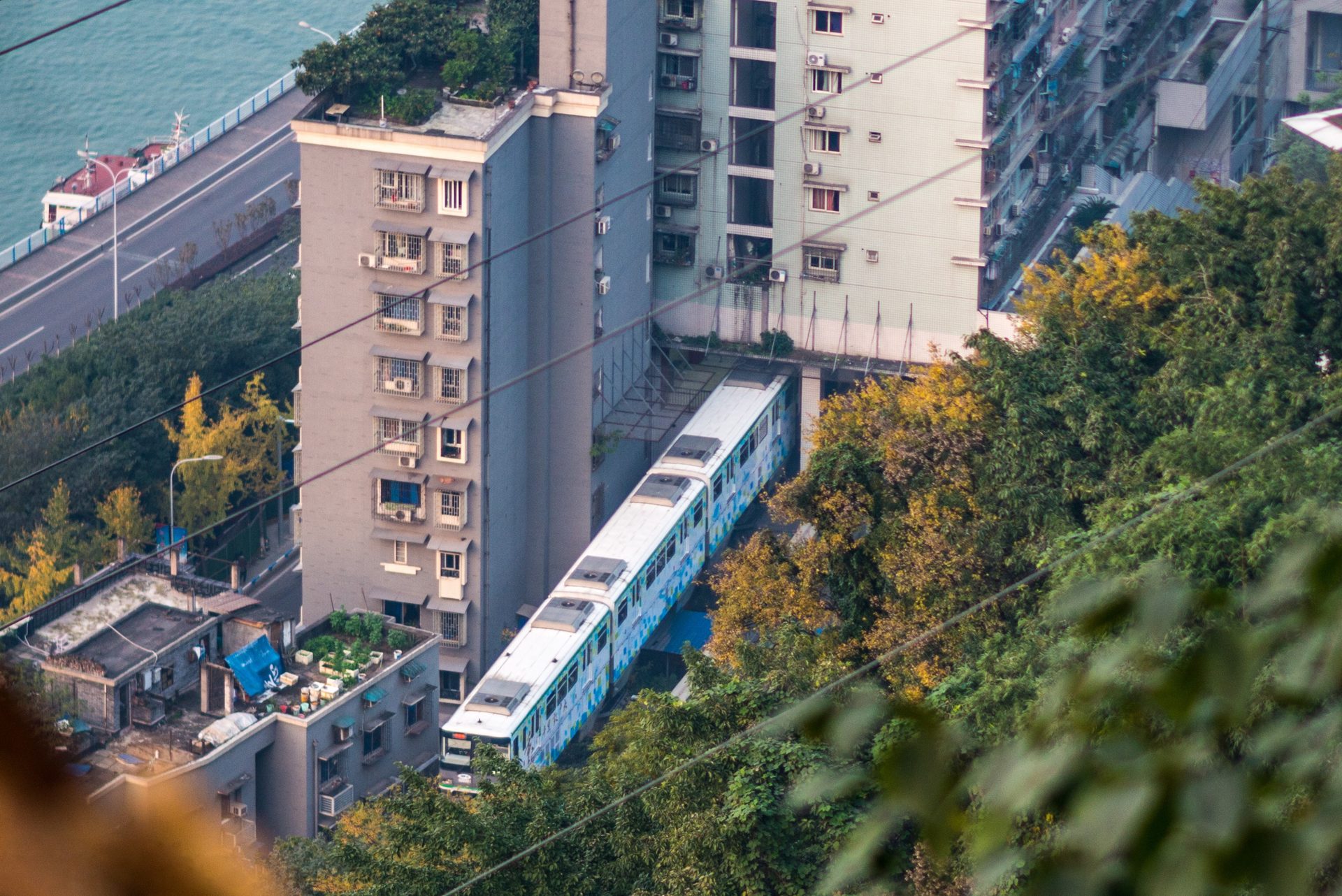
A monorail train runs out through the middle floors of a residential block. Below the track there is a noodle shop and a convenience store; above it, people are living in their apartments; the track crosses the building through a single span of 132 metres.
It is not a trick of editing. This is Liziba station on Chongqing Metro Line 2, the first straddle-beam monorail station in China built inside and alongside a commercial and residential block. It was completed in March 2004, opened for trial operation on 18 June 2005, and the trains have been running through it for more than twenty years.
For most foreign visitors arriving in Chongqing, it is the first thing they want to photograph, for a plain reason: it is free, open around the clock, needs no booking, and Line 2 has a station named Liziba. You step out and you are there. Chongqing's inbound visitor numbers rose 56.4 percent in the first eight months of 2026, and the city has been designated a priority inbound destination.
Why a train can run through a building
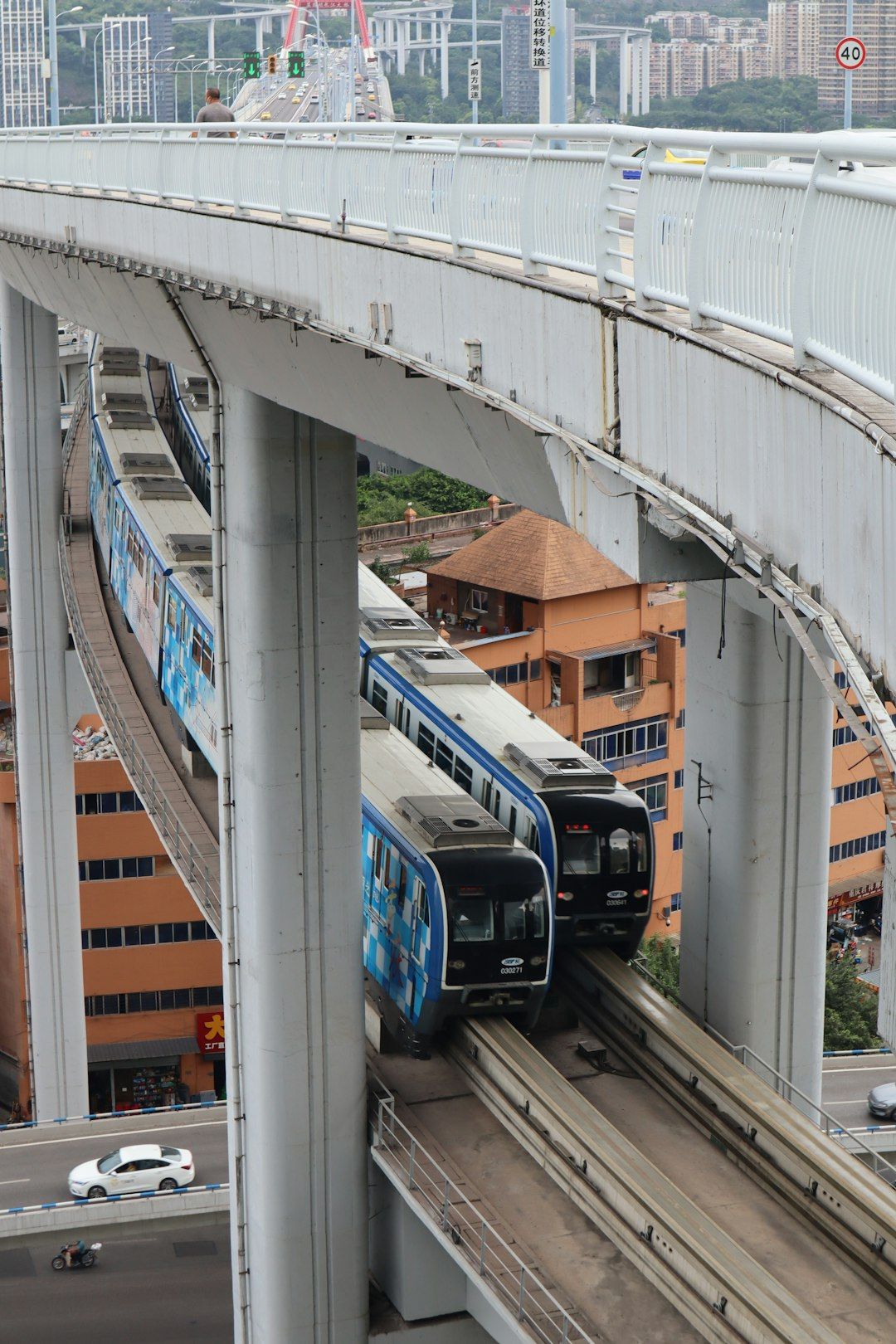
Most people assume the track was bored through a building that already existed. It was not. In 1998 the city planned a rail line from the centre towards Xinshancun, passing through Liziba, and a residential building was already on the drawing board at the same spot. The rail company and the developer faced a choice — should the train give way to the building, or the building to the train? They built both together instead, redrawing the design at least six times.
The solution is called station-bridge separation: the station structure is detached from the building, the monorail's running space from the residents' space, and the vibration system from the building frame. The six piles carrying the track beams are 38 metres each and are driven to the ground-bearing layer; the building stands on more than ninety piles of 69 metres each. Between the track-beam piles and the building there is a 20-centimetre safety gap.
Noise was handled with hardware rather than distance: the trains run on air-filled rubber tyres carried on air springs, and the official noise figure is kept below the city's average arterial-road level of 75.8 decibels. Residents interviewed inside the building said the passing trains were not audible.
So what you are looking up at is not a pierced building but two structural systems running through one space without touching.
The block at 39 Liziba Main Street is stacked in three bands: floors 1 to 5 are shops and offices, floors 6 to 8 are the rail transit area (concourse, equipment, platform), and floors 9 to 19 are apartments. Sources differ slightly — the district government says floors 6–7, most others 6–8 — so read it as 6 to 8 and check the signage.
The viewing deck built for the photo
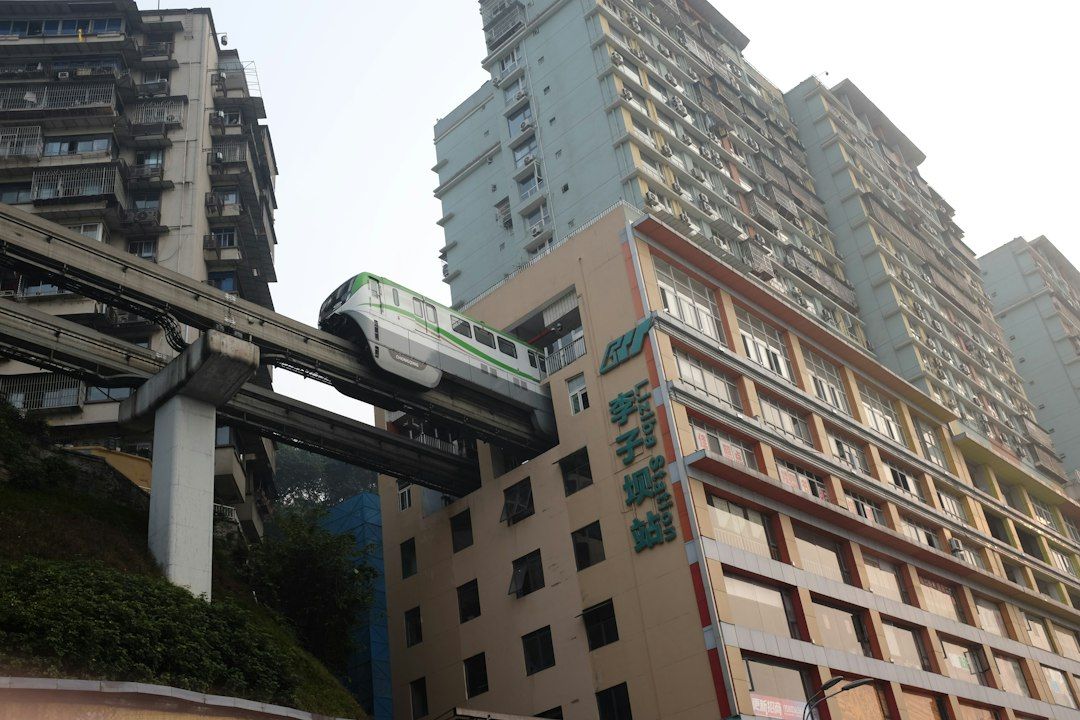
Once the crossing became famous, crowds photographed it from the kerb, which was neither safe nor a good angle, so a formal platform was built on the slope below the station.
It is divided into four zones: a coach drop-off area kept separate from the route independent visitors use; the main photography plaza of about 840 square metres; a glass walkway viewpoint that raises the angle; and a pedestrian route linking Liziba Park to the Jialing river road. The district government puts the platform at about 1,367 square metres in total, with public toilets of over 140 square metres beneath it — a detail that matters more to an actual visit than any list of camera positions.
Below the station slope there is also a large relief sculpture, "Soul of the Rock", by Jiang Bibo, which most visitors miss.
Is it worth going out of your way for?
Honestly: no, not as a reason to come to Chongqing. It is something you see while you are already in the city. But the payoff for the effort is very high — free, open at all hours, its own metro station, and 20 to 40 minutes covered. Don't schedule it as a dedicated morning outing: the travel and waiting take longer than the visit.
When to go
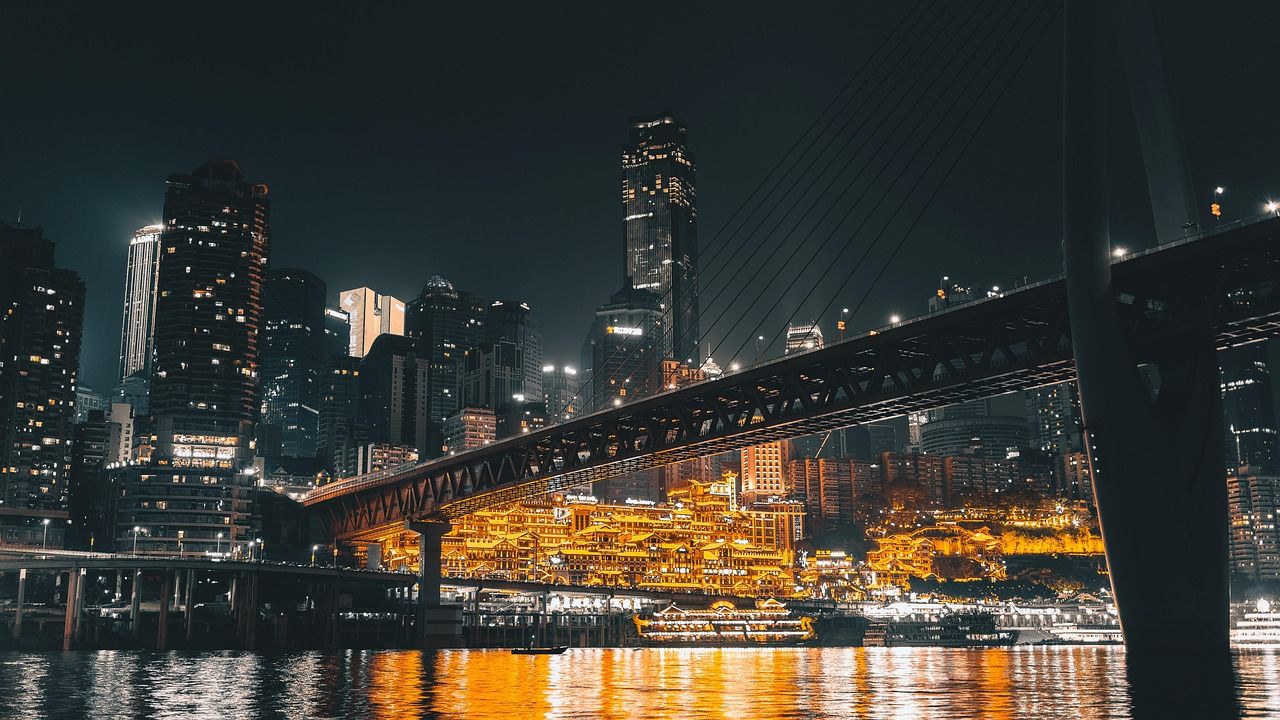
Morning light comes in from the side and the outline reads clearly, but tour groups arrive together from about 09:00. After dusk is the best of it: the station facade carries a gradient lighting scheme shifting from orange through yellow and back, and foot traffic drops noticeably after 22:00. Avoid midday, when the light comes straight down and flattens the crossing.
There is no official hourly data on how busy the deck is; claims like "quieter after 15:00" come from user-written guides. The reliable move is to avoid weekends and public holidays.
Three things worth knowing
The deck is free and nobody sells you a ticket. Ticketing pages list a zero-cost reservation option for Liziba station, and that is the whole of it. If someone offers a paid photo spot, it is not official.
The viewing deck is not inside the building. It sits on the road below the station slope. Leave by Exit 1, at street level on the south side of Liziba Main Street — there is no need to go up to the sixth-floor concourse at all.
Do not stop at the one frozen second. The glass walkway viewpoint is the useful platform: raising the angle fits the train's whole path, entering and leaving the building, into one frame. From ground level you only get the result.
Allow 20 to 40 minutes for the crossing itself, including waiting for two or three trains. The Liziba War of Resistance Relics Park adds about 40 minutes; E'ling Erchang, the Testbed 2 creative park to the north, is a 35-minute uphill walk in summer, or a short taxi ride.
Getting there
- From Jiangbei airport. Line 10 from Terminal 3 towards Lanhua Road, change at Zengjiayan to Line 2 towards Yudong, off at Liziba — about an hour including the change.
- From Chongqing North Railway Station. Line 3 from the south square to Niujiaotuo, then Line 2.
- From Chongqing West or Shapingba. Line 1, then change to Line 2.
- Driving is not advisable; parking around the station is tight.
Station opening hours are reported inconsistently, so check published first and last train times rather than a third-party page.
Arriving on a foreign passport
Liziba is close to barrier-free: no ticket, no reservation, and the station name appears in standard metro signage. Jiangbei airport has added a dedicated immigration channel and a transit-visa-free area with multilingual staff on duty.
On the wider policy, China applies unilateral visa-free entry for ordinary passport holders from 50 countries for tourism, family visits and transit stays of up to 30 days, and the 240-hour transit visa-free scheme covers 57 countries and 65 open ports. Whether either applies to you is a question for the immigration authorities and the notices at the port you use, not a travel guide.
Where a tour fits
There is nothing to book at Liziba, so a tour does not add access. It adds the rest of the day: the cross-city metro changes, and a route that chains the crossing with E'ling Erchang, Foutu Pass and the riverside parks without you working out the hills on a map.
No operator can improve on the deck itself — a free public platform takes no reservations, and no one can put the train back through the building on demand. Judge a listing on the stops around it, not the crossing — Line 2 reaches that for the price of a metro ticket.
FAQ
Does the Liziba monorail crossing cost anything?
No. The viewing deck is free and open all day, and there is no attraction ticket. Riding the metro is charged at normal Chongqing Rail Transit fares.
Which floors does the train pass through?
Floors 6 to 8 — the district government says 6–7, most other sources say 6–8, and early reports said the 8th floor, so check the in-station signage.
Which exit leads to the viewing deck?
Exit 1 of Liziba station on Line 2, at street level on the south side of Liziba Main Street. The deck is on the road outside the building, not in it.
Some links in this section are affiliate links — we may earn a commission if you book through them, at no extra cost to you. Affiliate disclosure.
Check dates and availability
Liziba needs no booking and no ticket, so what's worth comparing is what's actually inside the price — the metro logistics, the walk down to the deck, and the hill route on to E'ling Erchang and the riverside parks:
👉 Check dates and availability
Disclosure: This article includes an affiliate link. I may earn a commission if you book through it, at no extra cost to you. This guide describes publicly listed information only — I have not personally taken these tours.
Image sources: stock/library photos, credited where required.