Wulong's Three Natural Bridges: What the ¥155 Ticket Includes, and How to Do It in a Day
On this page
- What the Three Natural Bridges actually are
- Getting there: two stations, one transfer hub
- What the ¥155 ticket includes — and why you see other numbers
- Beating the elevator queue
- Longshuixia Fissure: add it or not
- Practical notes
- Where a tour fits
- FAQ
- Is one day enough for the bridges and the fissure?
- Do I need to worry about the elevator queue?
- Check dates and availability
Wulong is a district of Chongqing, and it has quietly become one of the places inbound visitors find first. According to the Wulong district culture and tourism commission, the district received 778,900 inbound visitors in the first three quarters of 2026, up 81.66% year on year — against 778,800 for the whole of 2025. Its source countries and regions rose from 10 in 2023 to 70, with Thailand the largest single source, passing 100,000 visitors in January–July alone.
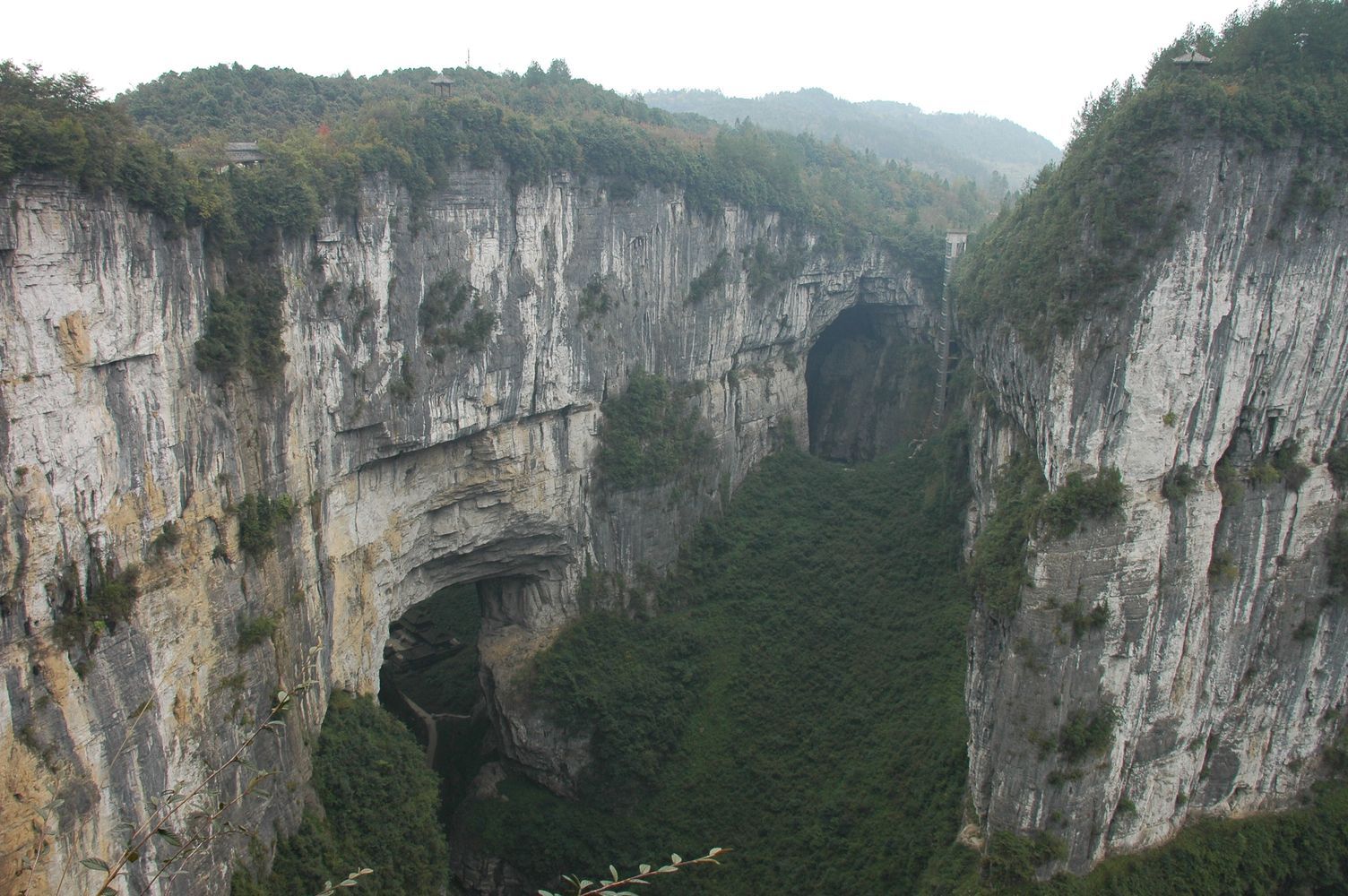
The site most of that traffic arrives at is the Three Natural Bridges: three colossal stone arches in a row with two collapsed sinkholes between them. It joined the World Heritage list in 2007 as part of the South China Karst.
This guide is about the practical part: how to reach it from Chongqing, what the ¥155 ticket actually contains, and how to spend one day well.
What the Three Natural Bridges actually are
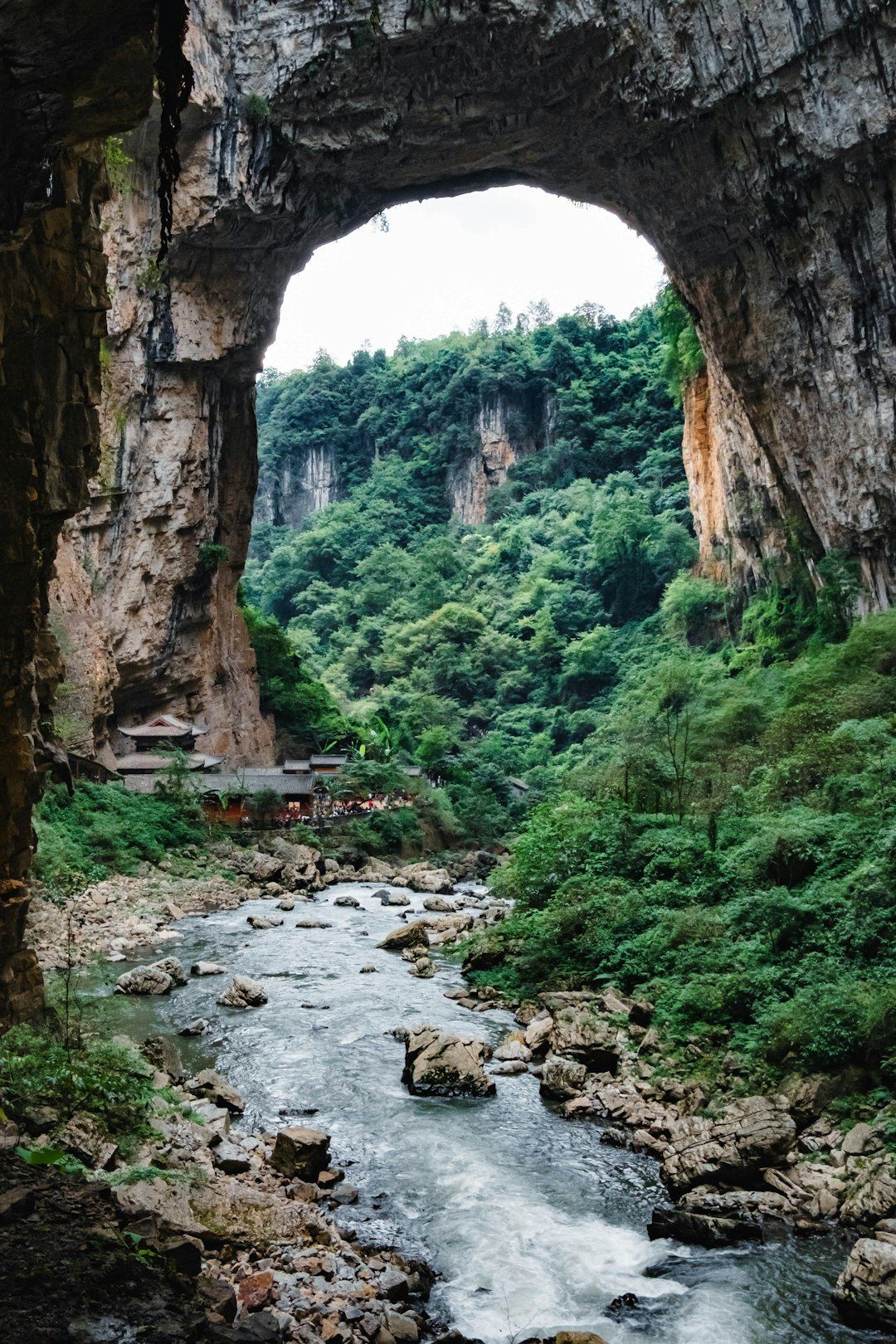
It is not one bridge. Tianlong, Qinglong and Heilong stand in sequence, with two sinkholes between them — the "three bridges over two sinkholes" layout, and the largest natural bridge cluster in Asia. That cluster is the core reason this karst landscape made the World Heritage list.
The route runs top-down, and it is one-way:
- Entrance to the 80-metre sightseeing elevator, dropping down a cliff face to the valley floor — one of the best photo stops of the visit, and the longest queue.
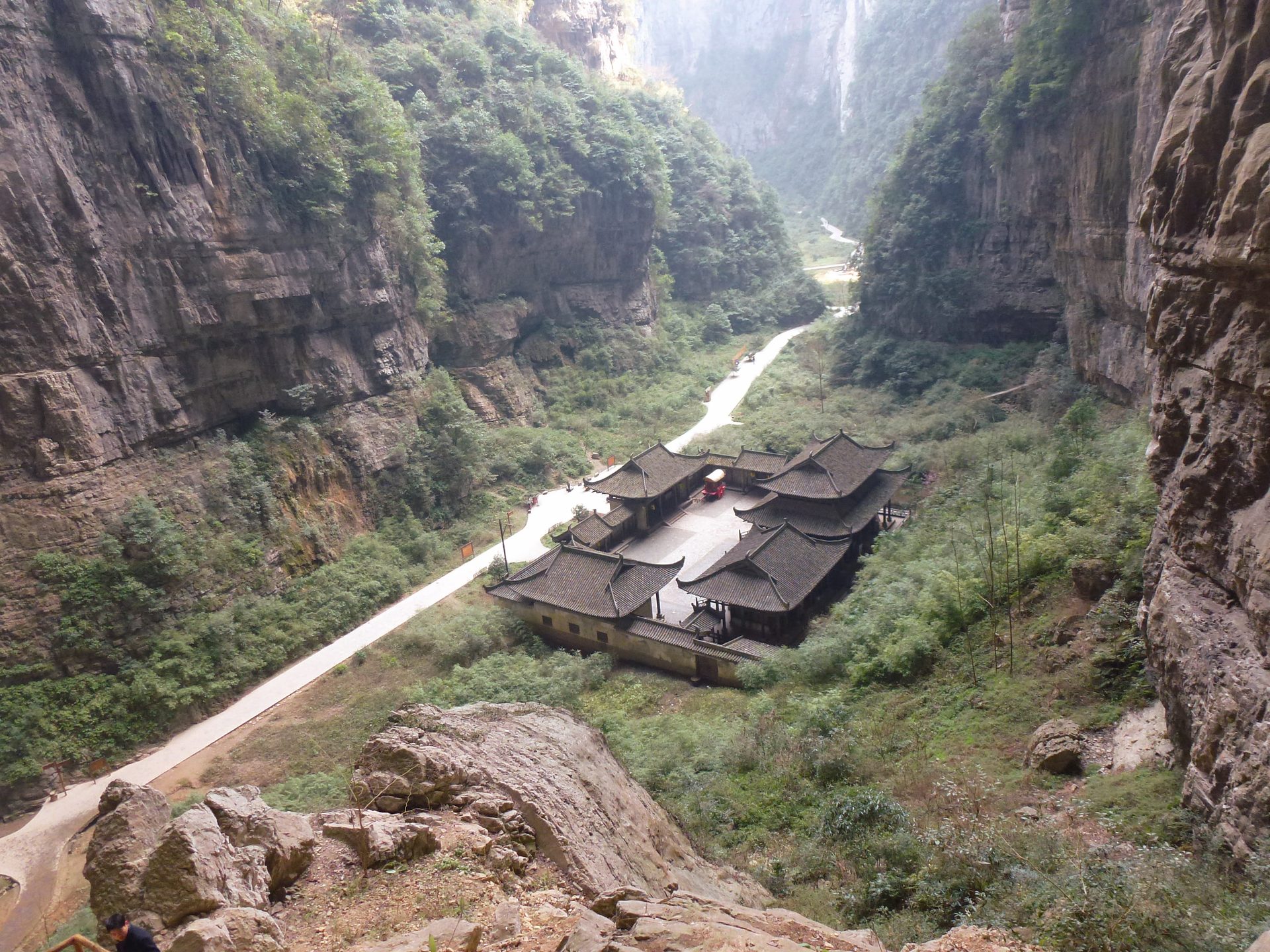
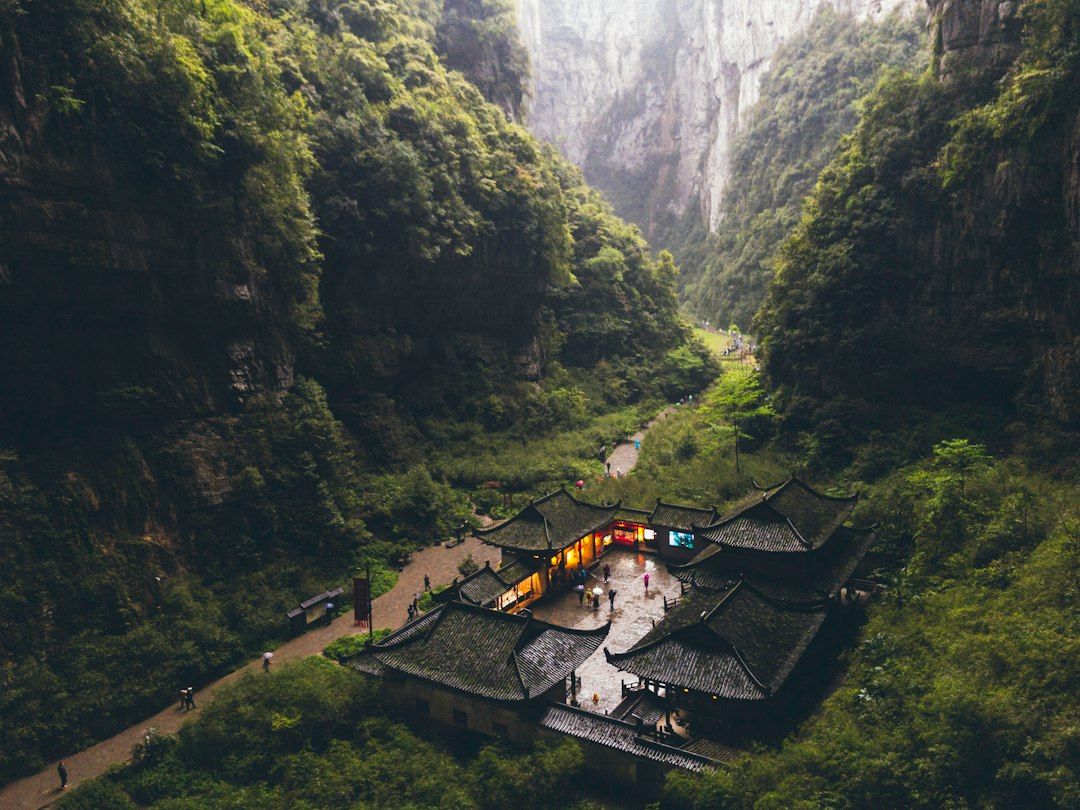
- Tianlong Bridge and Tianfu Guanyi. Beneath the first arch stands a Tang-style courtyard, a filming location for Curse of the Golden Flower, with a small post office inside where you can stamp and mail a postcard.
- Qinglong Bridge, the stretch used in Transformers 4 for the mechanical dinosaurs and labelled by the site as one of its highlights.
- Heilong Bridge and the Four Springs Waterfall, the last arch, with springs falling off the cliff face — the wettest section of the walk.
- The exit stretch, 1 km uphill to the shuttle stop. You can pay ¥15 for the electric cart or walk it in about 15 minutes; after 2.5 hours on the valley boardwalk, take the cart.
- The glass viewing platform is a separate add-on. If heights bother you, skip it — it is not part of the main route.
Getting there: two stations, one transfer hub
There are two different stations, so do not mix them up. High-speed (EMU) trains arrive at Wulong South; ordinary trains arrive at Wulong Station. They are not in the same place.
- High-speed is the recommended route. From Chongqing East Station, G and D trains reach Wulong South in as little as 35–45 minutes; Chongqing North and Chongqing West also have services, but they take longer. Second class runs ¥62–80, with departures between 7:00 and 21:00 — check 12306 for your date.
- The station exit is the part people get wrong. Wulong South is not at the scenic area. From the exit, shuttle buses run to the Xiannüshan Visitor Center, ¥10–16, taking 40–50 minutes; a taxi or ride-hailing car is listed at ¥50. The figures vary between sources, so go by the notice at the station exit.
- The visitor center is the only hub. Whichever way you arrive, everything changes there onto the scenic shuttle. There is left luggage at ¥10–20. Do not carry a large bag in: the route inside is a downhill boardwalk with no way back.
- By car. 180 km and 2.5 hours from central Chongqing on the Baomao expressway; park at the Xiannüshan Visitor Center and transfer, because cars cannot enter the core area.
What the ¥155 ticket includes — and why you see other numbers
The headline figure, on mainstream platforms in 2026, is an adult ticket at ¥155 covering the entrance ticket, the internal shuttle and the sightseeing elevator.
Why you will also find 125, 135 and 95 quoted online: the difference is usually whether the elevator and the shuttle are included, or whether the figure is an off-season price or a gate-only ticket. Compare the total on the official channel for your date rather than matching a blog post to the ticket window.
| Visitor | Price | Notes |
|---|---|---|
| Adults 60 and under | ¥155 | Entrance, shuttle and elevator |
| Children, full-time students, 60–64 seniors | ¥120 | With student card or ID |
| 65+ seniors, active military, disabled visitors | ¥85 (some channels report free entry for 65+ — confirm at the gate) | With supporting ID |
One conflict worth checking yourself: some travel-agency channels say visitors aged 65 and over pay no gate ticket and only the transport. Both versions have a source, so before you travel, test your birth year on the official Wulong Karst account or mini-program — for families travelling with older relatives this is a real difference.
Combined tickets. The Three Natural Bridges is ¥155 on its own and the Longshuixia Fissure is ¥105; some channels sell a dual-site combination for less than the two added together. Compare before you buy. Opening hours are 8:00–17:00 in summer (June–August) and 8:30–16:30 the rest of the year, day sessions only.
Beating the elevator queue
Almost all the queuing at this site happens at the sightseeing elevator, not on the valley boardwalk, which flows freely. Three rules do most of the work:
- Come early. In peak season and on holidays the queue after 9:00 can run to about half an hour; entering at 8:00 is the cheapest option in time.
- Or come in the afternoon. After 2:00 pm is a second, quieter window — but the gate stops entry around 16:30, so an afternoon visit means shortening your time at the bottom.
- Do the bridges before the fissure. The bridges take 2.5 hours, which fills the morning once you add transfers and queueing; reversed, you tend to hit the elevator at its peak.
Longshuixia Fissure: add it or not
The fissure is a separate site, not part of the Three Natural Bridges. It is adjacent, and there is a shuttle from the bridges exit (a five-minute drive), so you do not have to return to the visitor center.
The canyon runs 5 km long and 200–500 m deep, and at its narrowest the walls are only 1 metre apart — this is a crack in the rock, not an open valley. The highlights are an 80-metre waterfall and a chain of falls and pools along the floor, with 1.5–2 hours on foot.
One day: bridges in the morning (2.5 hours) → shuttle to the fissure (five minutes) → fissure in the afternoon (1.5–2 hours) → back to the visitor center → evening train from Wulong South. Budget about two hours at the city end, and a same-day return from Chongqing works, but the day is tight and holds exactly one combination.
With a second day, the natural additions are Xiannüshan (an alpine meadow at 1,900 m, with a treetop walk), Furong Cave, or Jingzhu Village, which holds a UN Tourism "Best Tourism Villages" listing.
Practical notes
- Non-slip shoes are a hard requirement. The valley floor is stone paving beside permanently wet cliffs; heels, smooth leather and canvas are all risky.
- Bring a light jacket. The sinkhole floor and the fissure run noticeably colder than outside — several sources put the fissure at around 18°C.
- Bring a disposable raincoat, not an umbrella. The fissure boardwalk is too narrow to open one, and the waterfall sections are damp.
- Do not buy the "¥30 low-price tours". Multiple guides note they recover the difference through forced shopping.
- Do not linger on the viewing platforms. There is falling rock and seepage above the cliffs and staff direct the flow of people; step aside to photograph.
- Food inside is sparse. Eat at the visitor center or in Xiannüshan town, and carry water.
Where a tour fits
A tour earns its price on the connective tissue: the station-to-visitor-center transfer, the change onto the scenic shuttle, timing around the elevator queue, and a guide to tell you which arch was in which film.
What a guided day cannot do is drive your car into the core area — nobody can — or move the afternoon entry cut-off. So read what a listing includes: entry ticket, shuttle, elevator, transfers, and whether the ticket is in the price or settled on the day.
FAQ
Is one day enough for the bridges and the fissure?
Yes. Bridges in the morning and the fissure in the afternoon fits, with two hours added at the city end.
Do I need to worry about the elevator queue?
Mainly in peak season and on holidays, when the queue after 9:00 can reach half an hour. Enter at 8:00, or after 2:00 pm, to avoid it.
Some links in this section are affiliate links — we may earn a commission if you book through them, at no extra cost to you. Affiliate disclosure.
Check dates and availability
Wulong's entry ticket, internal shuttle and elevator are normally bundled into one price, so the question is not the price but what each listing covers — tickets, transfers from Chongqing, guide and meals:
👉 Check dates and availability
Disclosure: This article includes an affiliate link. I may earn a commission if you book through it, at no extra cost to you. This guide describes publicly listed information only — I have not personally taken these tours.
Image sources: stock/library photos, credited where required.