Huanglong Cave, Zhangjiajie: A 16°C Cave That Is Not in the Wulingyuan Pass
On this page
- Why the cave punches above its weight
- Inside: a one-way route with two unmissable stops
- Why it holds 16°C
- Tickets: sold separately, not part of the Wulingyuan pass
- Getting there and when to go in
- Is it worth it, and where a tour fits
- Practical notes
- FAQ
- Is Huanglong Cave included in the Wulingyuan ticket?
- How much is a Huanglong Cave ticket?
- Do I need to book ahead?
- How long does Huanglong Cave take?
- Check dates and availability
Zhangjiajie is a mountain region in northwestern Hunan, and almost all of it depends on the weather: the sandstone pinnacles only reward you when cloud and visibility cooperate, cable cars shut in high wind, and rain turns the summits into a white wall.
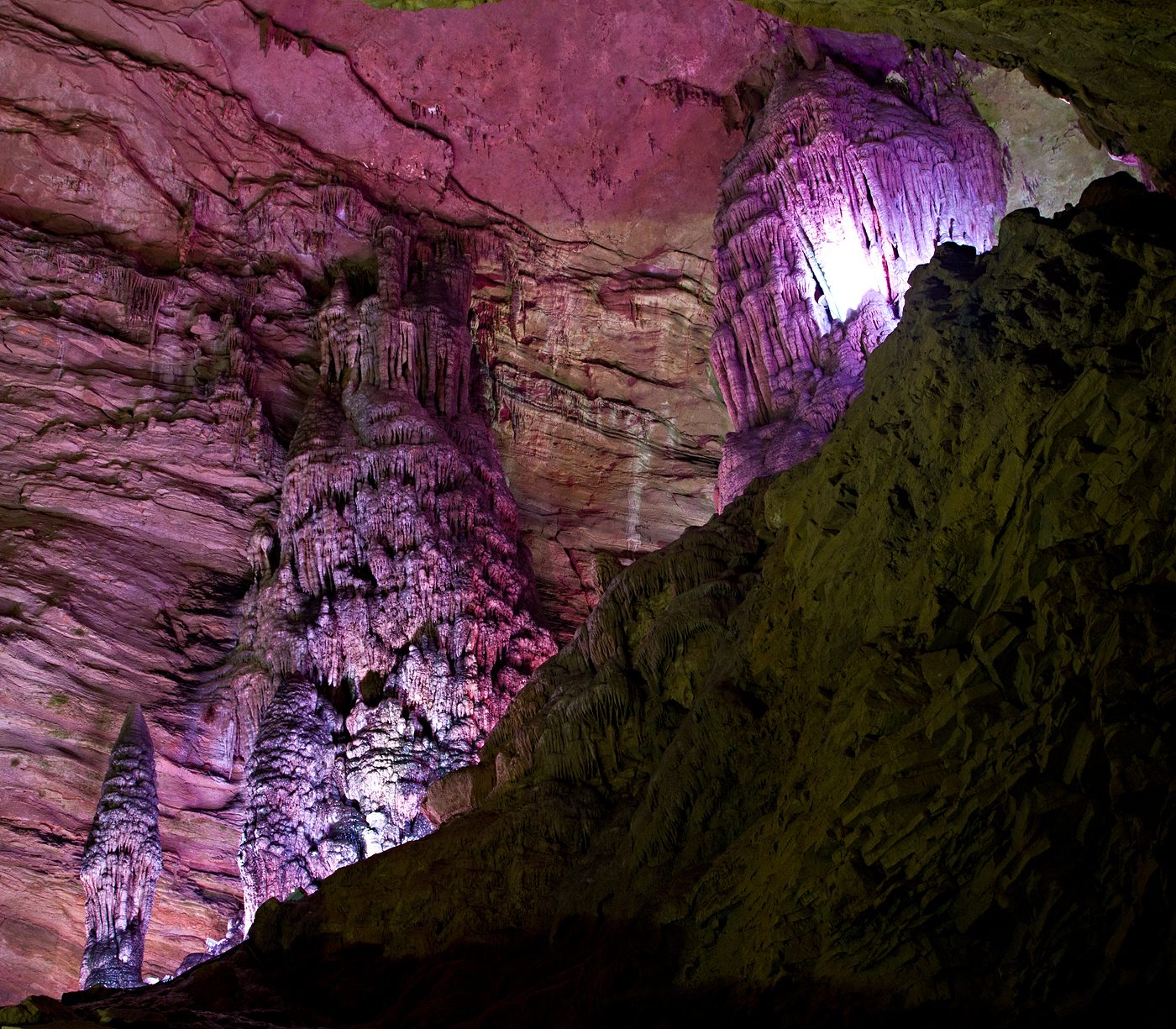
Huanglong Cave — "Yellow Dragon Cave" — is the exception. This limestone cavern in the Wulingyuan district holds a steady 16°C all year and opens whether it pours or blows a north wind outside, which makes it the one fixed point to build a Zhangjiajie itinerary around when the forecast turns.
It is also the most misunderstood ticket in the area: the cave is not part of the Wulingyuan pass, and buying a cheap ticket at the entrance is a bad idea. Here is what the cave is, what a ticket really covers, and how to fit it into half a day.
Why the cave punches above its weight
Since 10 October 2026, roughly 6,000 people a day have entered Huanglong Cave, barely down from the National Day peak — the local tourism authority calls it a "Golden Week that stretched into a golden month". Demand comes from off-peak inbound travellers from South Korea, Russia, Europe and North America, plus domestic retirees who travel outside school holidays. Zhangjiajie took 1.153 million inbound visitors in the first nine months of 2026, from 201 countries and regions, per the city's culture and tourism bureau.
It suits anyone who already has the Forest Park or Tianmen Mountain booked and a spare half day, anyone caught by rain, and families with reasonably mobile relatives over 60. It does not suit a three-hour visitor trying to see all of Zhangjiajie at once — the cave is on the Wulingyuan side, and a visit is a half day.
Inside: a one-way route with two unmissable stops
The cave is a single one-way loop with no doubling back. The official sequence runs:
Ecological Pastoral Square → ticket gate → Double Gate Welcome → Dragon Dance Hall → Xiangshui River dock (by boat) → Tianxian Waterfall → Tianzhu Street → Huaguoshan → Dragon Palace Hall → Dinghai Shenzhen → Hundred-Step Cloud Ladder → Pastoral Pasture exit.
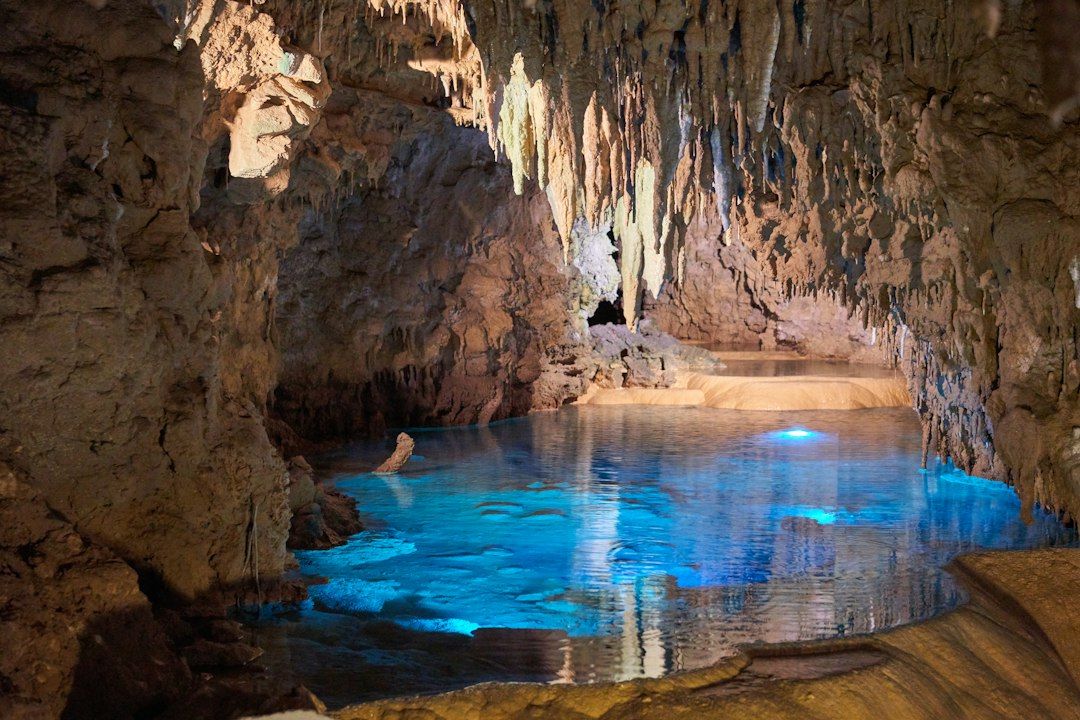
Xiangshui River is an underground river with a boat section of 800 metres, taking 10 minutes. The boat moves slowly, stalactites hang directly overhead — duck as you board — and the bow gives the widest view and the easiest photos.
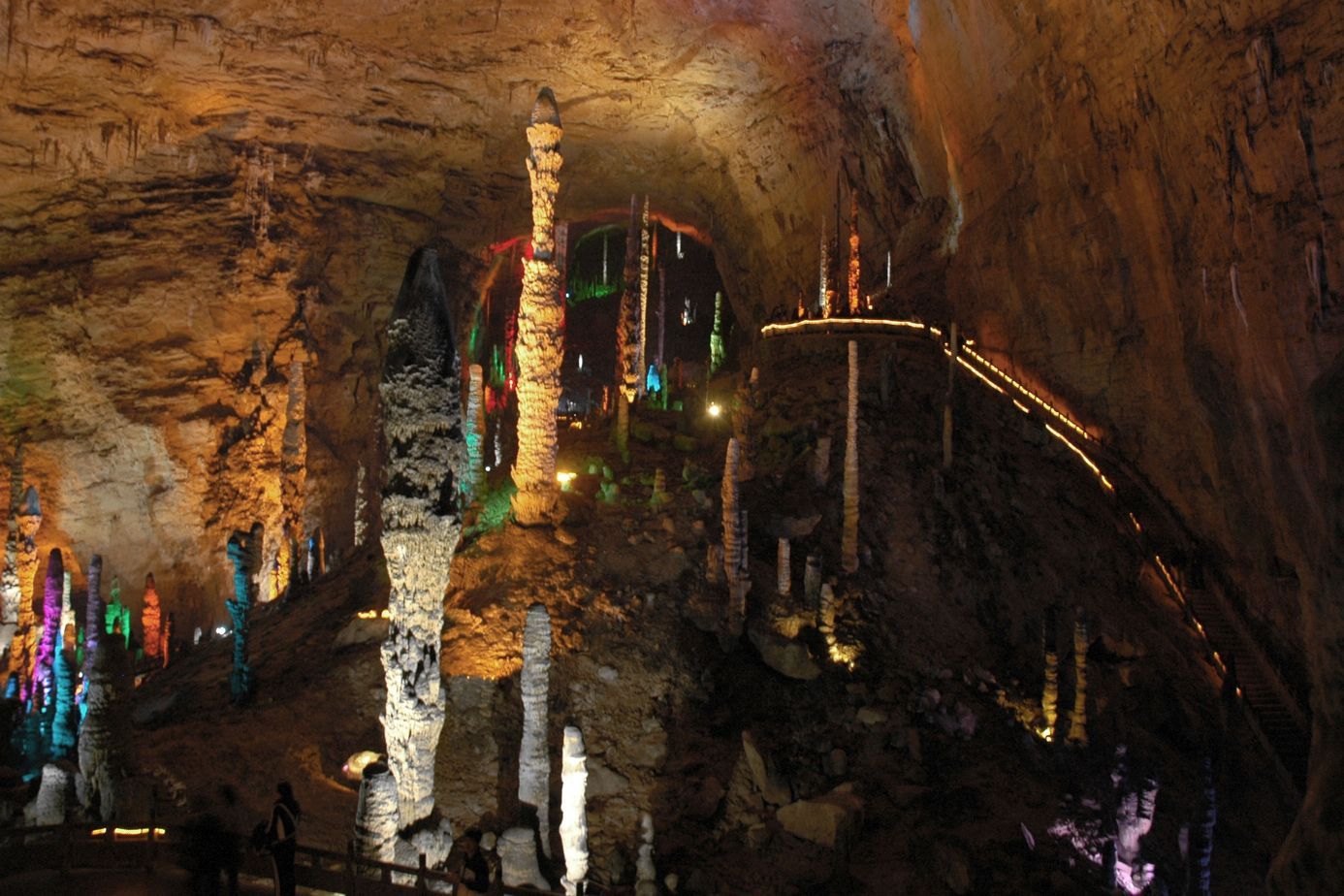
Dragon Palace Hall is 1,600 square metres holding thousands of stalagmites, including the cave's most famous formation, the "Dinghai Shenzhen": 19.2 metres tall and only 10 centimetres wide at its thinnest point. The operator says it has grown for some 200,000 years and has insured it for ¥100 million — both promotional claims, not third-party valuations. The cave also holds the Tianxian underground waterfall, 27 metres high; morning spray is heavy and, with luck, catches the light.
The main route takes 2 to 2.5 hours at normal pace. The Maze branch (¥15, self-paid) is a smaller second cave with denser stalactites and far fewer people, good for quiet photos; with it, allow 3.5 hours. Before you go in: there is no mobile signal and no restroom inside, and touching the stalactites is forbidden — they grow 1 cm a century, and damage carries a fine.
Why it holds 16°C
Thick limestone seals the cave from outside air, sunlight and surface water, so the interior settles near the local annual average — 16°C, some 10°C cooler than outside in summer and warmer in winter. Bring a light jacket in summer. The floor is wet throughout, so trainers are essential and heels close to unusable, and with a thousand-plus steps, go in early if you are with older relatives.
Tickets: sold separately, not part of the Wulingyuan pass
This is the question that comes up most, and the one people get wrong. Wulingyuan Scenic Area is the big basket — the official site lists Zhangjiajie National Forest Park, Huanglong Cave, Baofeng Lake, the Charming Xiangxi show, Xibu Street and others — but Huanglong Cave is a separately ticketed attraction. The official ticketing page lists the four-day "Wulingyuan core scenic area gate ticket" and "Huanglong Cave" on two separate lines, each bought on its own. Packages sold online as "Huanglong Cave + Forest Park" are two tickets bundled together, not one covering the other.
Huanglong Cave's own prices (2026 reference):
| Ticket | Price |
|---|---|
| Peak (Apr–Oct), adult | ¥121, including the Xiangshui River boat and the official guide |
| Off-peak (Nov–Mar), adult | ¥100 |
| Concession | ¥73 (ages 60–64, full-time students, ID required) |
| Under 14 / over 65 | most channels list a free gate ticket, boat included |
| Extras | Maze ¥15 and insurance ¥4, both optional |
Most channels list free entry for under-14s and over-65s, but a few platforms still list ¥25 and ¥43 tickets for those ages — check by age on an official channel before relying on it. Prices are set by the operator, so confirm the day's rate.
Booking. Entry is by online real-name reservation with your ID swiped at the gate, via the "Zhangjiajie Yijiyou" mini-program or the attraction's official channel. Low-price tickets at the gate are usually scalpers bundling a guide, a show or insurance — decline them. Hours are currently 08:00–17:30; sources disagree on last entry, quoting 16:00 or 17:00, so go by the day's official notice and do not cut it close.
Getting there and when to go in
Public transport. Zhangjiajie Central Bus Station to Wulingyuan Bus Station takes about 40 minutes (sources quote ¥12 or ¥20, possibly different services); from Wulingyuan, Bus 1 runs direct to the Huanglong Cave stop for ¥2, a few minutes' walk from the gate.
Taxi or shared car. Within Wulingyuan town, ¥15–30 for 10 minutes; from Zhangjiajie city, shared cars ¥30–40 per person. Self-driving: from the city, Changzhang Expressway then Route 241, about 40 minutes to an hour, with parking at the Ecological Square at ¥10 a day, unlimited time.
The cave is about a 10-minute drive from the National Forest Park's landmark gate, so keep cave and mountain in one area: one day for the mountain, one for the cave plus Baofeng Lake. Best entry window: tour groups concentrate mid-morning, so 08:30–09:30 is smoothest; after 3 pm the loop gets rushed.
Is it worth it, and where a tour fits
Not a reason to come to Zhangjiajie on its own, but worth half a day inside a trip. It is not a top-tier spectacle, yet it is a restart button for bad weather: the easiest way to waste a Zhangjiajie day is the weather, and one attraction that ignores it raises the tolerance of the whole itinerary. The cave temperature is the same year-round, so "best time" comes down to peak-season pricing (April–October) and crowds — November to March is off-peak, about ¥20 cheaper. If you want Zhangjiajie's clear autumn light (September–November), save the cave for the rainy day. Duration: main route 2–2.5 hours, about 3.5 with the Maze, half a day with transport and ticketing.
The rules are rigid: real-name online booking, one ticket per ID, a separate ticket from the Wulingyuan pass, and a last entry that does not budge. What a tour handles for you: the Chinese-language booking flow built around mainland IDs, the bus-to-bus transfer, and a guide in a cave with no English signage on the key formations. No operator can put a ticket in your hand: entry is issued against your ID, one per person. Read any listing closely and check whether the cave ticket is included or an extra at the gate.
Practical notes
- Food. No proper meal inside — only kiosks and vending machines — so eat at the farm restaurants around the Ecological Square or in Wulingyuan town first, and carry water in.
- Where to stay. Tujia stilt-house guesthouses a few minutes' walk from the cave put you at the entrance early; budget options cluster near the Forest Park landmark gate, or in Zhangjiajie city, 40 minutes away and handy for Tianmen Mountain.
- Five things to remember. Do not treat it as part of the Wulingyuan ticket; do not buy scalper tickets at the door; do not wear heels or skip a jacket; use the restroom and send messages before you enter; and do not leave entry until late afternoon.
FAQ
Is Huanglong Cave included in the Wulingyuan ticket?
No. It is a separately ticketed attraction, and the four-day Wulingyuan core gate ticket does not cover it. Packages online bundling the two are two tickets sold together, not one covering the other.
How much is a Huanglong Cave ticket?
Peak (April–October) ¥121 for an adult, including the Xiangshui River boat and guide; off-peak ¥100; concession ¥73. The Maze is ¥15 and insurance ¥4, both optional.
Do I need to book ahead?
Yes. Entry is by online real-name reservation with ID swipe, through the official channel. Avoid the low-price tickets sold at the entrance.
How long does Huanglong Cave take?
The one-way main route is 2–2.5 hours; add the ¥15 Maze branch for 3.5 hours. With transport and ticketing, plan on half a day.
Some links in this section are affiliate links — we may earn a commission if you book through them, at no extra cost to you. Affiliate disclosure.
Check dates and availability
Huanglong Cave sells a separate ticket from the Wulingyuan pass, so the only useful comparison is the inclusion list — the cave ticket, transfers, an English-speaking guide, or only some of the three:
👉 Check dates and availability
Disclosure: This article includes an affiliate link. I may earn a commission if you book through it, at no extra cost to you. This guide describes publicly listed information only — I have not personally taken these tours.
Image sources: stock/library photos, credited where required.