Jingdezhen Imperial Kiln Museum: Free Entry, a Paid Neighbourhood, and the 17:30 Cut-Off
On this page
- Free is not the same as paid, and neither is the same as booked
- Opening hours, and the line that actually matters
- Why 2026 is the year it matters more
- What else the one pass covers
- Three ways people get this wrong
- If you only have time for one place
- Where a tour fits
- FAQ
- Is the Imperial Kiln Museum free?
- Do I still need a reservation if the museum is free?
- When is the museum closed?
- What is the 17:30 rule?
- Check dates and availability
The Imperial Kiln Museum in Jingdezhen does not charge admission, and it is still possible to be turned away twice in one afternoon — once at the district gate, once at the museum door. Two separate rules sit on top of each other.
The museum stands inside the Taoyangli historic district, on the site of the Ming and Qing imperial kilns. The route in is two steps, in order: buy a Taoyangli pass, then reserve the museum itself through the official channel. Turning up with one and not the other gets you nowhere. The other trap is a clock: the galleries shut at 17:30, four and a half hours before the site closes at 22:00, so an evening arrival buys you architecture and night lighting but no porcelain.
Free is not the same as paid, and neither is the same as booked
It is worth separating the three things, because this is where most wasted trips happen.
The pass. Taoyangli is a ticketed historic district, and official and platform listings put the pass at roughly ¥47 to ¥53. Students pay about half, ¥26, and visitors aged 65 and over go free. Some platforms sell a bundle that adds the museum's blue-and-white digital art exhibition for about ¥88. The pass normally allows repeat entry over three days.
The reservation. A free museum is not a reservation-free museum. Under the published entry rules the Imperial Kiln Museum must be booked on the official mini-programme, and without a booking you do not get in. Slots around public holidays are extremely tight.
The district hours. Taoyangli itself opens 08:30 to 22:00, with last check-in at 21:30.
Opening hours, and the line that actually matters
The museum's published hours are Tuesday to Sunday, 09:00 to 22:00, last entry 21:30, open on public holidays. In plain terms that means it closes on Mondays — do not schedule Jingdezhen's museums for a Monday.
Then comes the line that decides your whole afternoon. Before 17:30 you can see the artefact galleries. That is where the repaired pieces excavated from the imperial kiln are shown — broken and reassembled ware, Ming and Qing imperial fragments, much of it from the same production as pieces now in the Palace Museum in Beijing. After 17:30 the galleries are closed, and what remains is the exterior of the building and the night lighting on it.
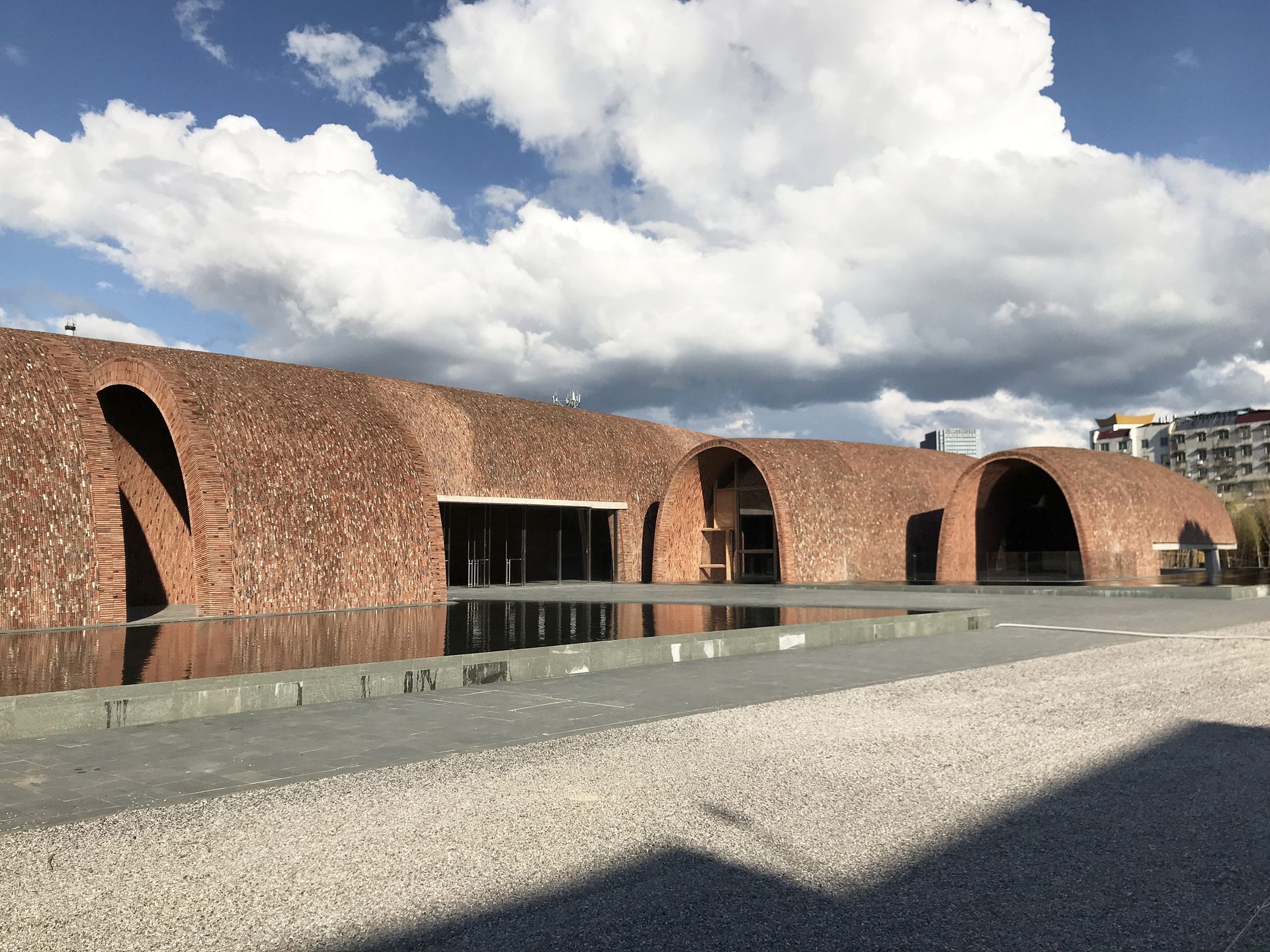
The building is worth that on its own: eight red-brick vaulted halls shaped after the ancient wood-fired kilns that once stood here, with a shallow reflecting pool in front of them. Planning your arrival depends on which of the two you have come for.
| What you want | Arrive around |
|---|---|
| Artefacts + architecture + night lighting in one visit | 16:00 |
| Artefact galleries only, with the fewest people | 09:00 – 11:00 |
| Vaults, reflections and blue-hour light only | Sunset |
| Evening lanes and market only, no museum | After 18:00 — no museum booking needed (the district pass still applies) |
The whole district takes four to six hours to walk properly. The museum alone is one to two hours.
Why 2026 is the year it matters more
On 25 July 2026, at the 48th session of the World Heritage Committee in Busan, South Korea, the handcrafted porcelain industry remains of Jingdezhen were inscribed on the World Heritage List, taking China to 61 World Heritage sites. Two firsts came with it: the first Chinese inscription of the industrial-heritage type, and the first World Heritage site in the world with porcelain as its theme.
The inscription covers five component areas — the town production centre, the Hutian ancient kiln site, the Gaoling porcelain clay mine, the Changling porcelain stone mine and the Jiaotan kiln-fuel area — the whole chain from clay and fuel to firing and river export. Taoyangli, where the museum stands, is the town production centre.
Jingdezhen's inbound numbers have moved with its profile: in 2025 foreign visitor arrivals rose 39.63 percent year on year and inbound spending 44.59 percent. At peak, more than 5,000 foreign ceramicists were living in the city — the "foreign Jingpiao".
What else the one pass covers
Taoyangli is not one museum plus a ticket window. The pass covers the whole former imperial kiln compound.
- The imperial kiln archaeological site park. The original Ming and Qing official kiln grounds. Under the glass walkway you look down at Ming kiln beds and workshop foundations, including the pits where rejected official ware was smashed and buried on the spot.
- Longzhu Pavilion. The city's landmark and the old office of the imperial kiln supervisors, with a view over the surrounding lanes from the top.
- Xujia Kiln. The most completely preserved Ming and Qing wood-fired kiln in Jingdezhen, and a live site rather than a reconstruction. Firing ceremonies happen occasionally.
- The old lanes. More than a hundred narrow lanes with walls built from discarded kiln bricks, and residents still living in them.
Three ways people get this wrong
Treating "free" as "no planning". The museum ticket is free; the way in is not. In high season, and above all around public holidays, reserve through the official channel ahead of time.
Scheduling a Monday. The Imperial Kiln Museum closes on Mondays outside public holidays. So does the China Ceramics Museum across town, which is also free but also requires advance booking — the published guidance is to book five to seven days ahead on the same mini-programme, with timed releases around holidays. Fitting both into one day does not work.
Assuming a 22:00 close means an evening of galleries. Last entry is 21:30, and the artefact halls are shut from 17:30. If you want the porcelain and the vaults and the night lights, arriving by 16:00 is the only arrangement that gets all three.
If you only have time for one place
- Taoyangli — for the excavated imperial kiln site and the museum on top of it.
- China Ceramics Museum — for the full history of Chinese ceramics and the sculpture visitors call the speechless Buddha. Free, but book in advance.
- Ancient Kiln Folk Custom Expo Area — a 5A-rated site where you can watch craftspeople throwing and painting by hand and try it yourself, 08:00 to 17:00, entry about ¥95.
The three do not overlap. Choosing between them is a question of whether you want the site, the collection or the process.
Where a tour fits
What makes Jingdezhen awkward is not the price — a ¥47–53 pass is cheap — but the stacking: a district pass from one channel, a booking from a Chinese-language mini-programme, a 17:30 gallery cut-off and a Monday closure, all on the same day. The saving with a tour is the booking step and the timing, and a guide can explain what the shards in the galleries actually are, which no label at the site will tell you in your own language.
A guide changes the logistics, not the rules — the pass is still paid entry, the reservation is still per person, and nothing reopens the galleries after 17:30. Check whether a listing includes the Taoyangli pass and the museum reservation, or only transport and commentary.
FAQ
Is the Imperial Kiln Museum free?
The museum has no admission charge of its own, but it sits inside the ticketed Taoyangli historic district, so you need the district pass first — roughly ¥47 to ¥53, about ¥26 for students, free for visitors aged 65 and over, and normally valid for repeat entry over three days.
Do I still need a reservation if the museum is free?
Yes. The published entry rules require a booking made on the official mini-programme, and without one you are not admitted. Holiday slots are very tight.
When is the museum closed?
Mondays, outside public holidays. Published hours are Tuesday to Sunday, 09:00 to 22:00, with last entry at 21:30. The surrounding district runs 08:30 to 22:00 with last check-in at 21:30.
What is the 17:30 rule?
Before 17:30 you can see the artefact galleries, including the repaired imperial kiln pieces. After 17:30 those galleries are shut, and the building exterior and its night lighting are what you get. For artefacts, architecture and night lighting in one visit, arrive by 16:00.
Some links in this section are affiliate links — we may earn a commission if you book through them, at no extra cost to you. Affiliate disclosure.
Check dates and availability
Jingdezhen asks you to buy one ticket and book another, on a clock that shuts the galleries at 17:30 in a city where the museums close on Mondays, so the thing worth comparing is what each operator actually covers — the Taoyangli pass and the museum reservation, or only the transport and the guide:
👉 Check dates and availability
Disclosure: This article includes an affiliate link. I may earn a commission if you book through it, at no extra cost to you. This guide describes publicly listed information only — I have not personally taken these tours.
Image sources: stock/library photos, credited where required.