The Terracotta Army Ticket Also Covers Lishan Park — and the Real Bronze Chariots Are There
✅ Status check (verified 2026-10-19): open; off-season hours (last entry 16:30) start November 16. Details: Terracotta Army open-status check.
On this page
- One ticket, two sites
- What the three pits actually are
- The bronze chariots are in Lishan Park
- A well, in 1974
- Booking: online only, and no ticket window
- How long, and when to go
- Practical rules and common traps
- Where a tour fits
- FAQ
- What does the ¥120 ticket include?
- Where are the bronze chariots?
- Can I buy a ticket at the gate?
- Check dates and availability
This is not a guide to getting to the Terracotta Army. There is already a separate piece on that — the 40 km from Xi'an, and DIY versus a guided tour. This one covers something simpler and more commonly missed: what the ticket in your hand actually covers, and where the two bronze chariots really are.
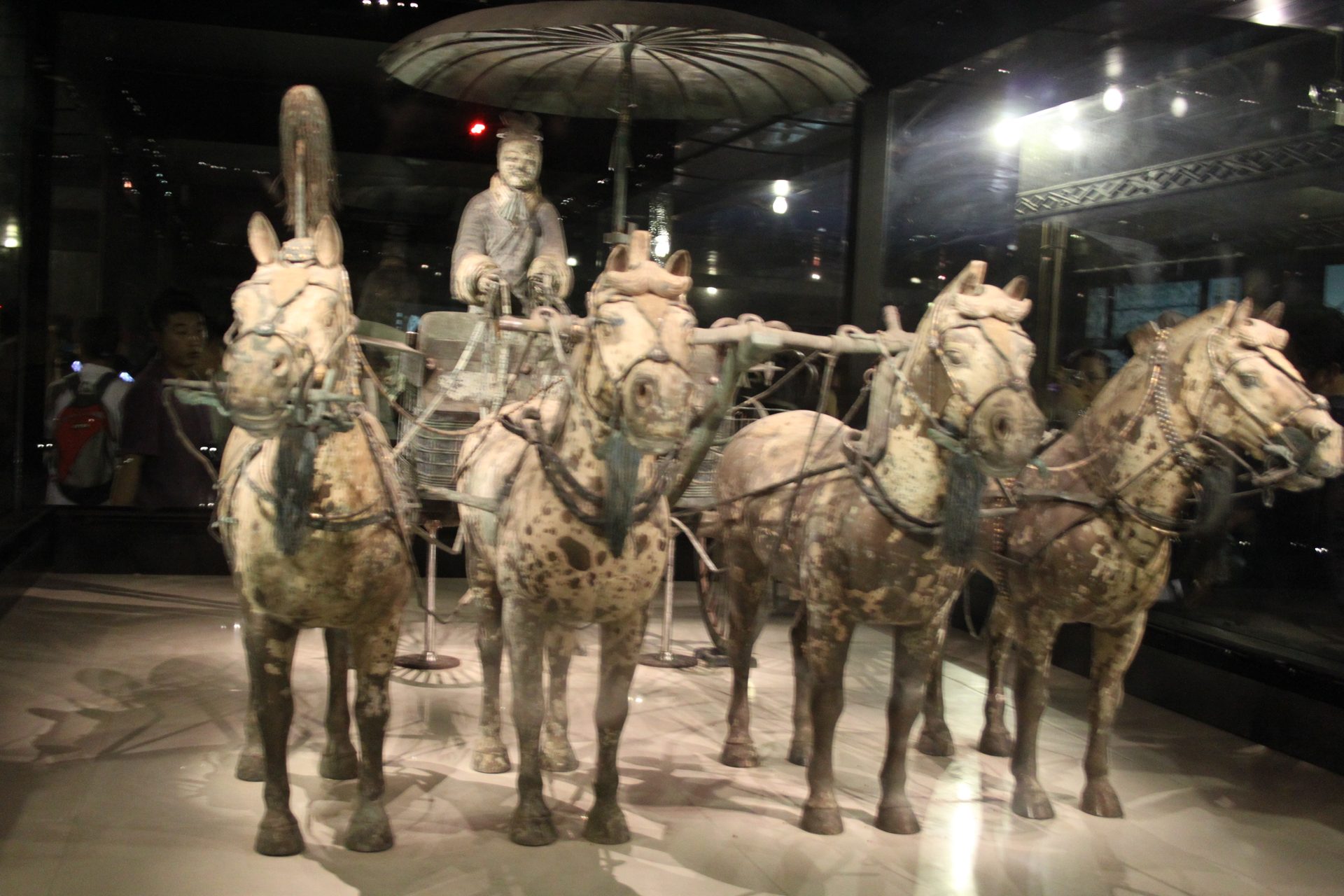
Your ticket is ¥120, and it buys two sites, not one — the Terracotta Army Museum and Lishan Park, the Emperor Qinshihuang's Mausoleum Site Park. Many visitors crowd through Pit 1, take a few photographs, and leave. The two painted bronze chariots known as the "crown of bronze" are in the other site — and most of those visitors never see them.
One ticket, two sites
Both sites are included in the same ¥120 ticket, and a free shuttle runs between them: the two sit 2.2 km apart, the ride takes 10 minutes, and the shuttle runs roughly every 20 minutes.
Lishan Park is large. Walking the whole thing takes more than 3 hours, so an electric cart at ¥15 for the full loop is the sensible way to cover it.
What the three pits actually are
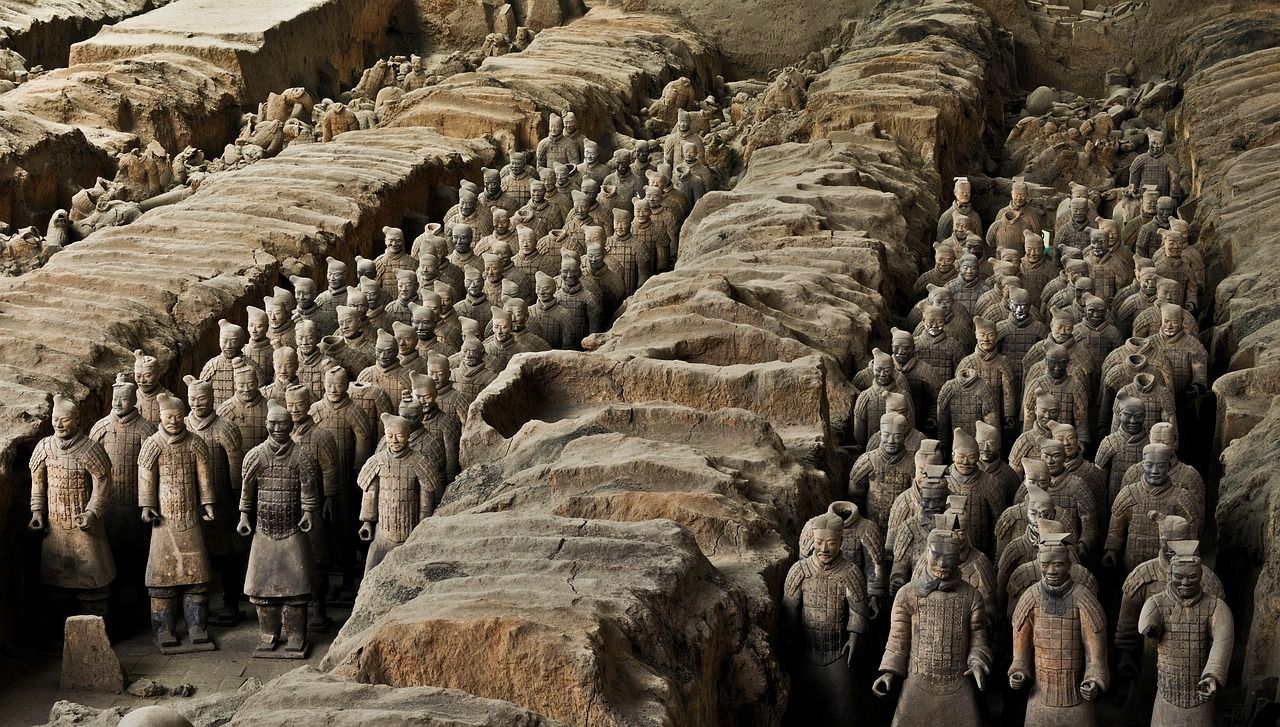
Pit 1 is the icon, and it is not one pit but an army. It measures 230 m east to west and 62 m north to south — 14,260 square metres, roughly two football pitches — and by the density of the figures uncovered it is estimated to hold around 6,000 pottery warriors and horses.
What makes it grip people is not the number but the arrangement. At the eastern end, three rows of 210 armoured warriors face east, holding crossbows — the vanguard. Behind them stand 38 columns with four-horse chariots, the armoured figures gripping long weapons — the main body. Then a south-facing row, a north-facing row and a west-facing column — the flanks and the rear guard. They do not face the enemy; they face the directions an enemy might come from. Standing at the rail, you are looking at a complete order of battle, not a set of sculptures.
Where to stand in Pit 1: there is a mid-level viewing platform, and the middle of it gives you the full ranks. At the far end of the pit is the conservation area, where restorers can be seen at work — the quietest corner, and worth two minutes.
Pit 3 is small but senior. It covers 520 square metres and holds 68 warriors, one chariot and four horses — a fraction of Pit 1. But it is laid out in a U shape, with the figures standing face to face rather than in battle formation, and scholars read it as the command post directing Pits 1 and 2. One line to remember it by: Pit 1 is the body, Pit 3 is the brain.
Pit 2 is the mixed formation. About 6,000 square metres with more than 1,300 figures, it combines crossbowmen, chariots, cavalry and infantry — the widest range of troop types of the three.
The bronze chariots are in Lishan Park
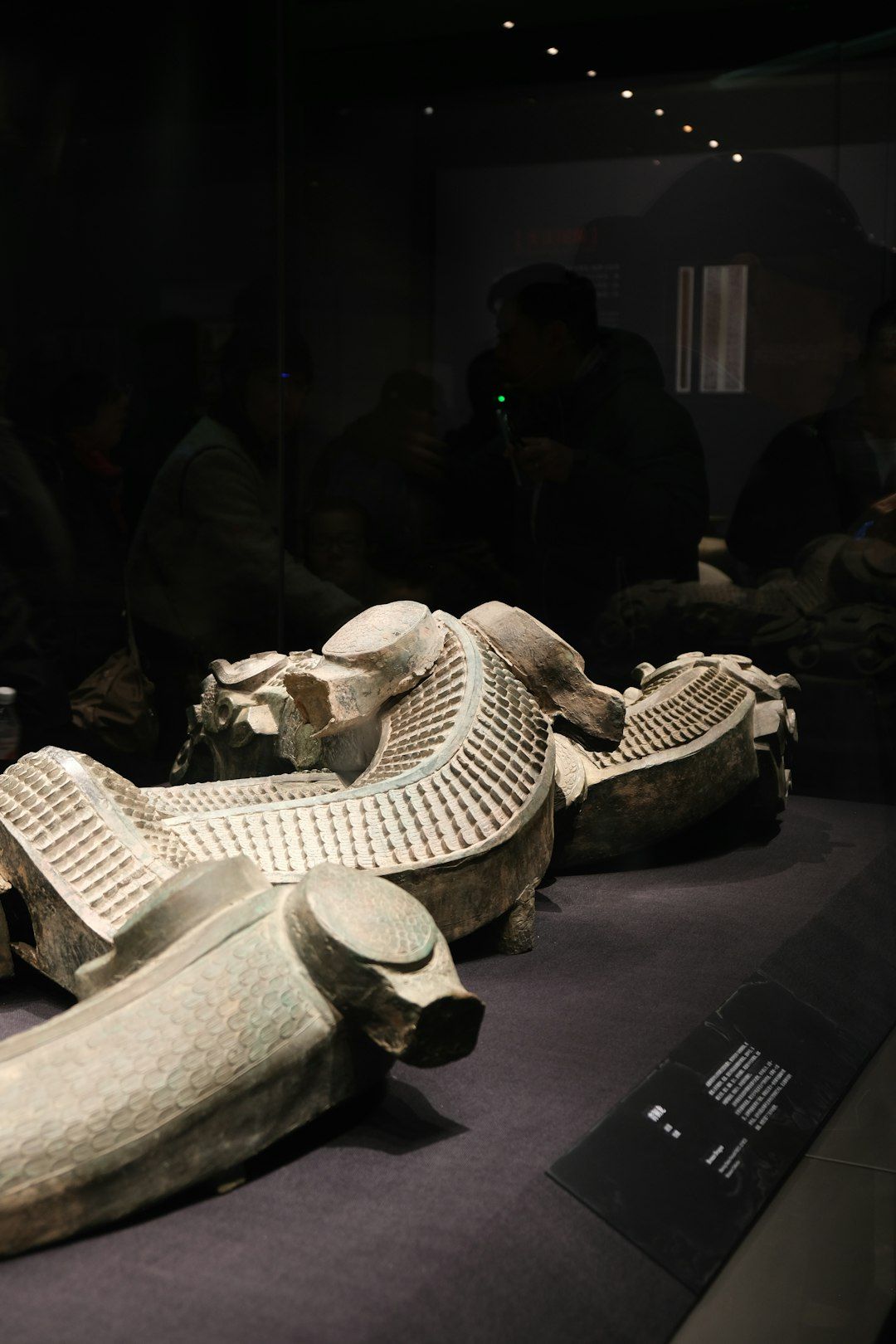
This is the most easily missed fact on the whole site. In 1980, on the west side of the mausoleum, two painted bronze chariots were excavated — a high chariot and a safe chariot, cast at half scale — 1:2 against a real person and vehicle. They are the largest, most complete and most convincing ancient bronze chariots yet found, and they are called the "crown of bronze".
They are displayed in the Bronze Chariot Museum in Lishan Park — not in the Terracotta Army Museum. If you leave after Pit 1, you have missed them.
Lishan Park holds two more pits worth the shuttle ride:
- The Acrobats Pit (K9901), whose figures are mostly bare-chested and in exaggerated poses, understood as court acrobats of the Qin period.
- The Civil Officials Pit (K0006), whose figures wear long caps and carry documents — as if an underground administrative staff had been laid on for the emperor.
The mausoleum itself is on a different scale again: a cemetery area of about 56.25 square kilometres, with more than 400 pits and tombs identified so far. The burial mound is unopened. What you are walking across is a corner of it.
A well, in 1974
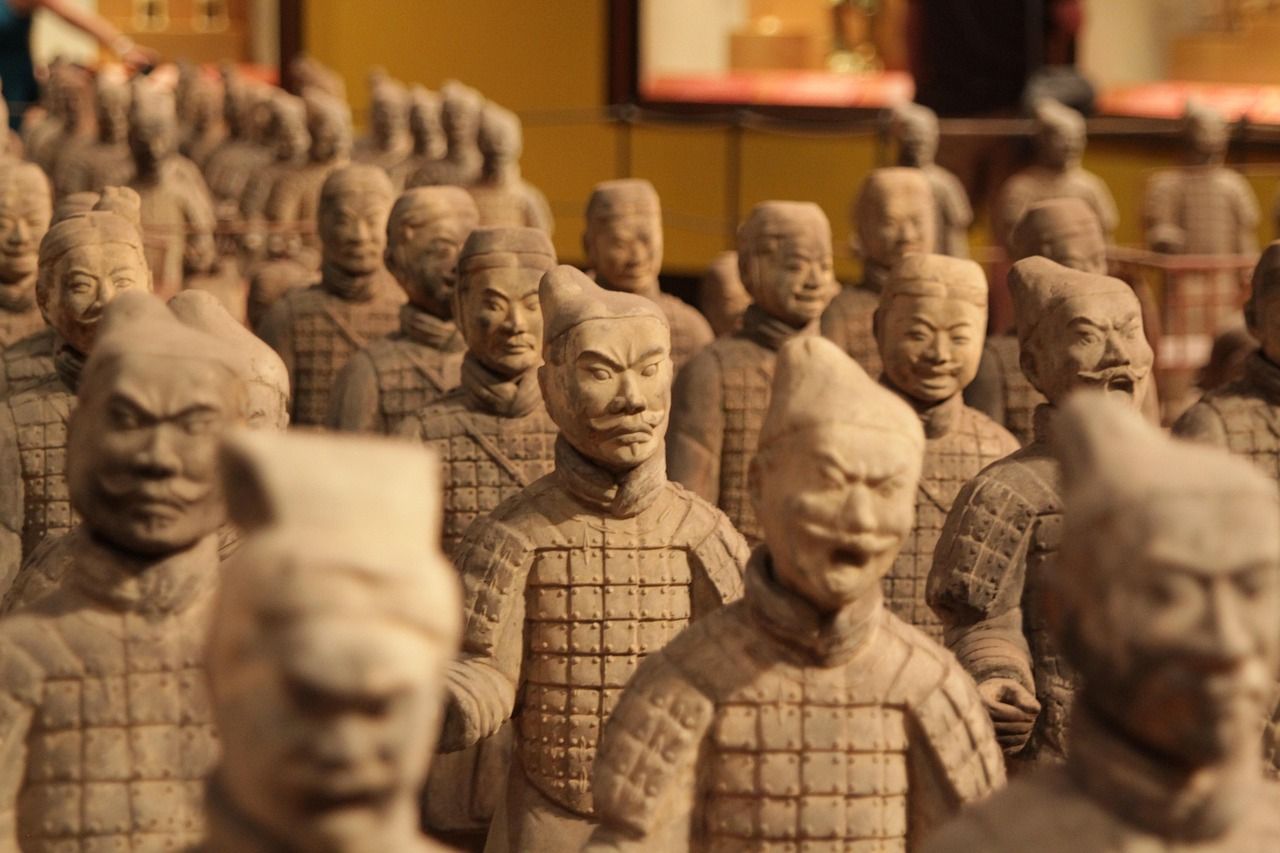
In March 1974, villagers at Xiyang in Lintong, digging a well against drought, struck life-size fragments of pottery. A survey over the following year confirmed a large pit — Pit 1 — and on 1 October 1979 the museum opened. One farmer's hoe turned up an army that had been buried for two thousand years.
Booking: online only, and no ticket window
- Adult ¥120, covering the museum and Lishan Park. Full-time undergraduates and below pay ¥60 with a student card; 65+ seniors, under-16s and other exempt groups enter free but still need a reservation.
- There is no ticket window on site. Everything is real-name online booking, including for visitors who qualify for free entry. Official channels are the museum site
bmy.com.cnand the museum's official WeChat accounts. - Tickets are generally released 7 days ahead, and holidays can shift the schedule. In peak season, book 3–7 days out, at the moment they open.
- Bring the original document you booked with — for foreign visitors, your passport. A QR code on a phone is not the entry credential.
- Opening hours: peak season (16 March – 15 November) ticket check from 8:30, last entry 17:00; off-peak (16 November – 15 March) from 8:30, last entry 16:30. Confirm on the official notice before you go.
How long, and when to go
- Museum only (three pits plus the exhibition hall): 2.5–3 hours.
- Museum plus Lishan Park, done properly: 4–5 hours.
- Add 2–3 hours for the round trip from central Xi'an, 40 km each way.
Go in at opening, 8:30. Tour groups arrive in force after 10:00 and the Pit 1 platform turns crowded; after 14:30 it thins out, which suits a slower, deeper look. A guide is worth the money: official guides cost about ¥90–100 per session for up to five people, and a group can share one. Without interpretation you are largely looking at clay figures without knowing why the formation is ordered as it is, or what is clever about the chariots' harness. Avoid unlicensed guides.
Practical rules and common traps
- Third-party "fast track" and "insider ticket" offers are fake. The site authorises no such channel.
- Do not pose with the costumed "terracotta warriors" or "bronze men" around the site — they charge after the photo.
- Wear comfortable shoes. The site is large and you will be on your feet for hours.
- Food and drink inside are pricey, so carry water and a snack; the commercial street outside has the usual Xi'an staples.
Where a tour fits
A guided day absorbs the driving, the shuttle between the museum and Lishan Park, and an English-speaking guide for the pits and the chariots — which matters a lot if you are not travelling with a Chinese speaker.
What a guided day cannot do is bypass the reservation system — every entry ticket is bound to the passport number you booked with. So check what a listing includes — entry ticket, transport, guide — and check whether Lishan Park is on the itinerary at all, because a short half-day tour may cover the museum only and quietly leave the bronze chariots out.
FAQ
What does the ¥120 ticket include?
Both the Terracotta Army Museum and Lishan Park, with a free shuttle between them. It is one ticket for two sites, not two tickets.
Where are the bronze chariots?
In the Bronze Chariot Museum in Lishan Park, 2.2 km from the Terracotta Army Museum — not in the museum itself. Take the free shuttle, ten minutes.
Can I buy a ticket at the gate?
No. There is no ticket window on site; all tickets are real-name and booked online, and even free-entry visitors must reserve. Tickets are generally released 7 days ahead.
Some links in this section are affiliate links — we may earn a commission if you book through them, at no extra cost to you. Affiliate disclosure.
Check dates and availability
Entry here is issued against your passport and released online in advance, so read the inclusion list before you book — museum entry, the shuttle to Lishan Park, an English-speaking guide, or only some of them:
👉 Check dates and availability
Disclosure: This article includes an affiliate link. I may earn a commission if you book through it, at no extra cost to you. This guide describes publicly listed information only — I have not personally taken these tours.
Image sources: stock/library photos, credited where required.