Mogao Caves Tickets: What the ¥238 and ¥100 Options Actually Include
✅ Status check (verified 2026-10-19): open year-round; winter hours and tickets (¥140, 10 caves) start December 1. Details: Mogao Caves open-status check.
On this page
- The two tickets, side by side
- What you are walking through
- Booking: the part that catches people out
- Where a guided tour fits
- Planning the day
- Practical rules
- FAQ
- What is the difference between the ¥238 and ¥100 tickets?
- Is the emergency ticket still worth buying?
- How far in advance should I book?
- Are the eight caves fixed?
- How do I get there from Dunhuang?
- Can I take photos?
- Check dates and availability
Four hundred and ninety-two caves survive at Mogao, cut into a cliff face in the Gobi outside Dunhuang. Some 45,000 square metres of wall painting and more than 2,400 painted sculptures were made here over roughly a thousand years, from the 4th century to the Yuan dynasty. It is a UNESCO World Heritage Site, and it is the reason most foreign travellers put Dunhuang on a China itinerary at all.
It is also the single hardest ticket in China to buy on impulse. There is no ticket window at the site. Standard tickets are released exactly 30 days ahead and sell out. If you want to see the caves properly, the planning starts about a month before you land.
This guide covers what the two ticket types actually include, how foreign visitors book, and how to build a sensible day around it.
The two tickets, side by side
Mogao sells two products, and the gap between them is bigger than the cave count suggests.
| Standard (Type A) | Emergency (Type B) | |
|---|---|---|
| Price | ¥238 | ¥100 |
| Caves | 8 | 4 |
| Two digital films | Yes | No |
| Guided group with headset | Yes | No |
| Shuttle to the cliff | Yes | Yes |
| Time on site | 3–4 hours | About 1 hour |
Three things disappear with the cheaper ticket, not one:
The films. Both screenings happen at the Mogao Digital Exhibition Centre before you reach the caves. One is a wide-screen history of Dunhuang; the other is a dome projection that magnifies the inside of a cave across the whole ceiling. That second film matters more than it sounds — the real caves are dimly lit and you only stand in each one for a few minutes, and the dome fills in the detail you will miss. Emergency tickets skip both.
The guide. Standard tickets run in groups of roughly 25–30 with a live guide and headsets; emergency tickets get an audio device or a steward pointing the way, with the crowd.
Four of the caves. The eight caves are not fixed. They are assigned by the site's daily rotation and span different dynasties, so what you see depends on the day you go. Emergency tickets see four, also decided that morning. Neither is announced in advance.
What you are walking through
Mogao was not built in one push. A monk named Yuezun is recorded as cutting the first cave in 366 AD after seeing golden light on the ridge; construction continued across more than ten dynasties.
A few things worth knowing before you go in:
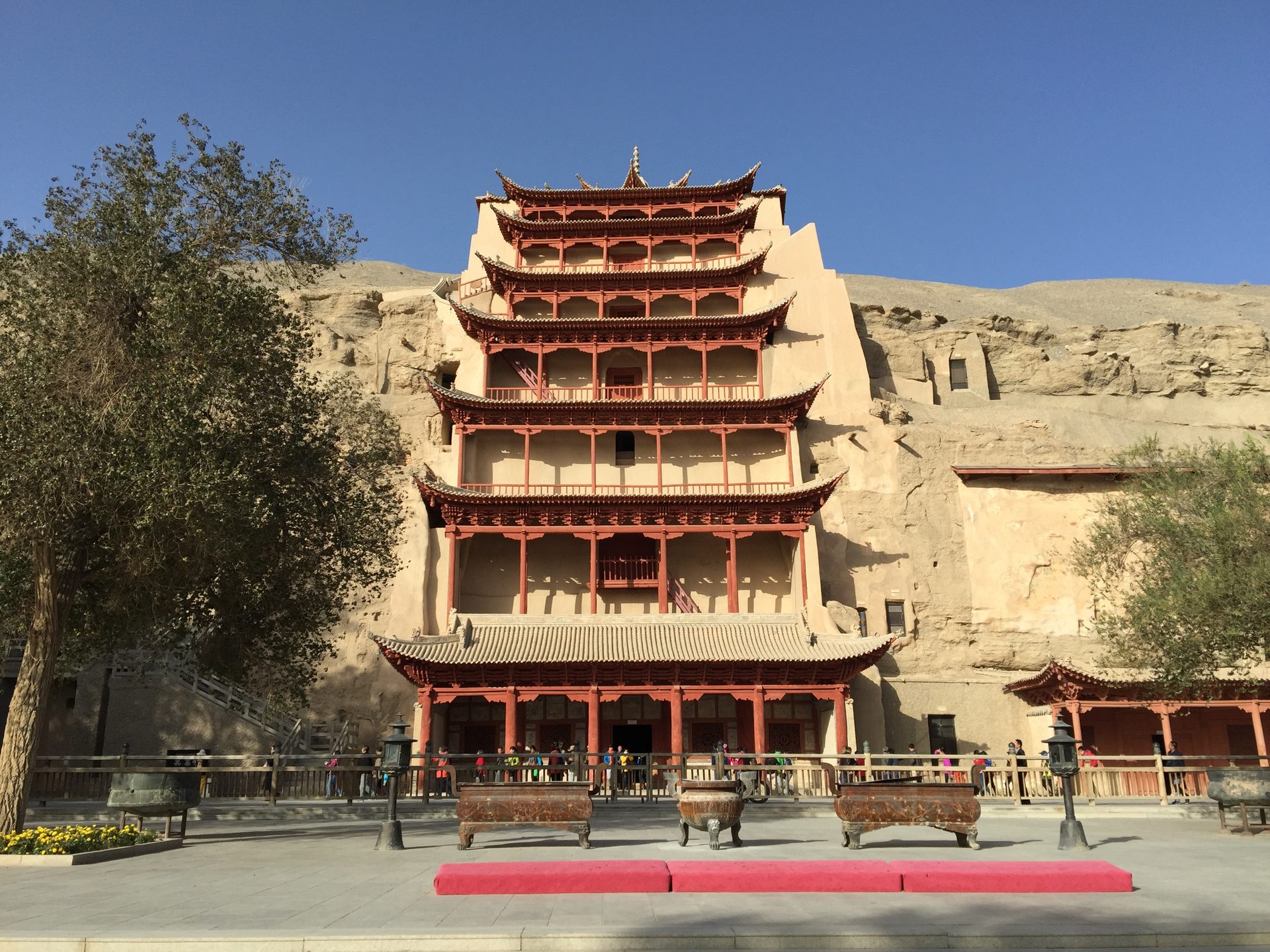
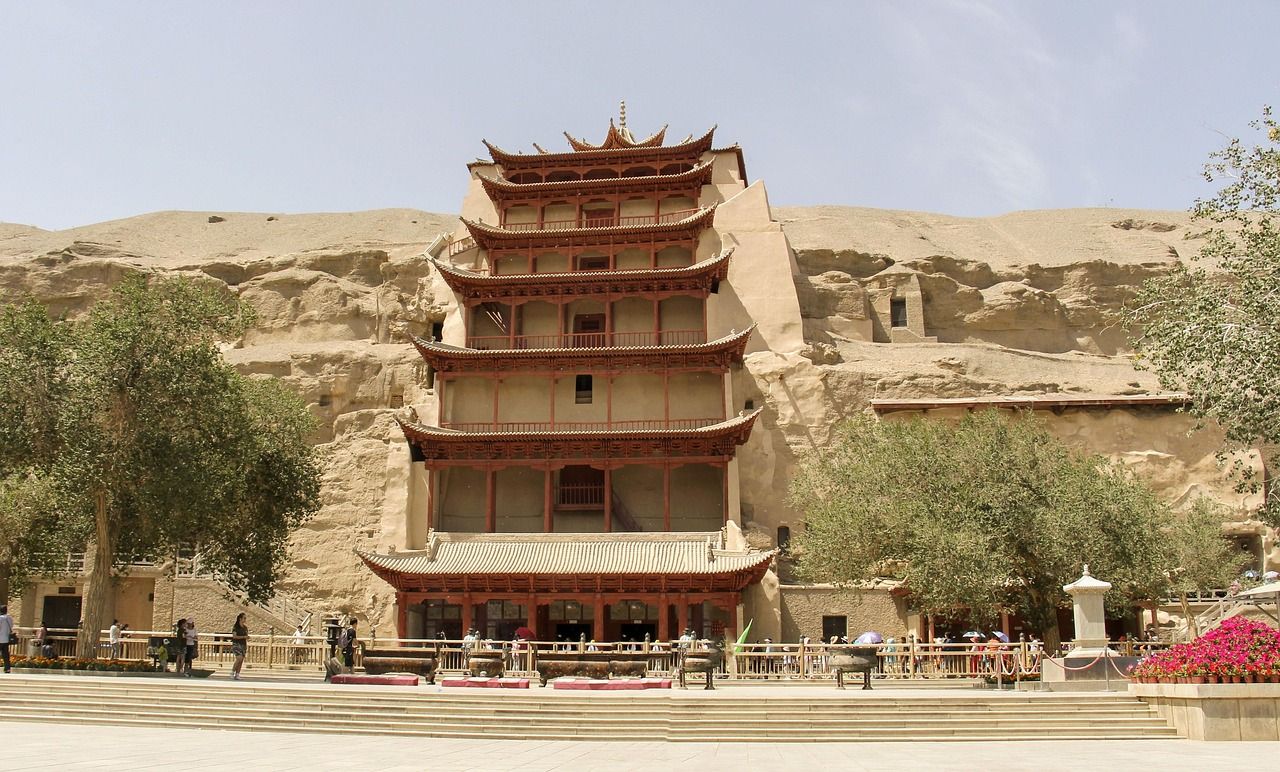
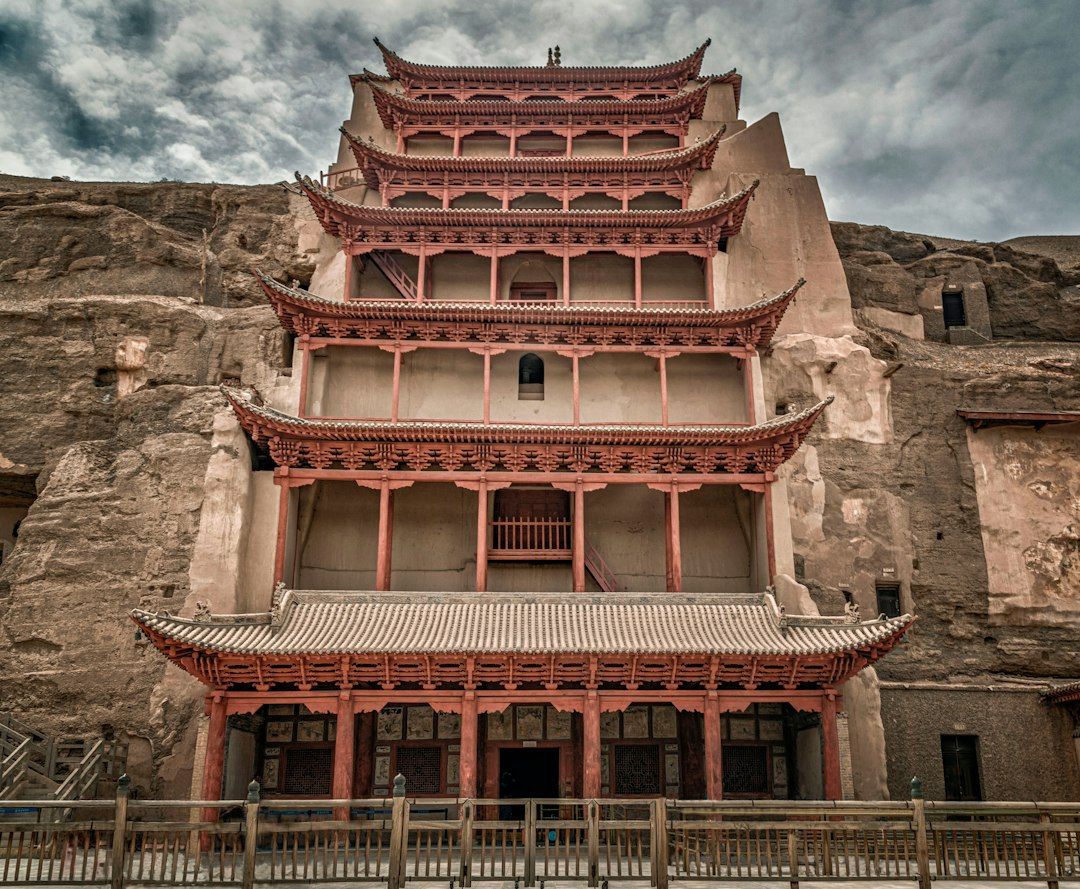
Cave 96 is the landmark. The nine-storey wooden façade has been rebuilt repeatedly through the Tang, Song and Qing dynasties, and the 35.5-metre seated Maitreya Buddha inside is the largest figure at the site. It is the silhouette on every poster.
Cave 17 is the other thread. In 1900 a Daoist caretaker, Wang Yuanlu, cleared drifting sand and found a sealed chamber barely ten square metres across, packed with manuscripts and silk paintings from the 4th to 11th centuries — tens of thousands of items. Much of it was later dispersed to Britain, France, Russia and Japan. The academic field of Dunhuang studies exists because of that one small room.
The blue is not local. The pigment that stayed vivid for a millennium is lapis lazuli, imported from Afghanistan. In the Tang period a gram of it was worth roughly a gram of gold. It is a good reminder of what this place actually is: a storehouse assembled by the Silk Road from many directions, not a closed Chinese collection.
Do not leave immediately after the caves. There is a conservation and research exhibition centre in the cave area with full-scale replica caves — and those you can photograph.
Booking: the part that catches people out
- There is no on-site ticket window. Turning up without a reservation means you do not get in.
- Standard tickets open 30 days ahead, on the official WeChat mini-program or the official site (
mgk.org.cn), and sell through quickly in peak season. - Foreign passports book through the English entry on the official service account, and collect against your passport. Tickets are strictly real-name, one per person.
- The Dunhuang Academy has stated repeatedly that it authorises no third-party resellers. "Insider tickets" and "booking agents" on social platforms are not official. Do not use them.
- Emergency tickets: about 12,000 a day, part released online a day ahead and part held for travellers already in Dunhuang. Exact timing is announced daily — there is no fixed rule.
Special caves can be added after the standard visit, at roughly ¥150–200 per cave. Which ones are open changes daily; do not plan around cave numbers from an old blog post.
Where a guided tour fits
The rules are rigid: real-name, per passport, released 30 days out. What a tour handles for you: the logistics — the drive from Dunhuang, the shuttle between the digital centre and the cliff, and an English-speaking guide for the caves themselves, which is the part most visitors cannot do for themselves.
What a guided day cannot do is get you in without a ticket, because entry is issued against your own passport. So before you book, split the listing into its parts — entry ticket, transfers, guide — and see which of the three are actually in the price.
Planning the day
Go in autumn if you can. September and October are the most comfortable months, around 20°C by day and generally dry. Late spring and early November are the next best windows. July and August are hot, and the hardest months to get a ticket.
The digital centre and the caves are two different places. You collect your ticket and watch the films at the digital centre east of the city, then take the shuttle to the cliff — the shuttle is included in the ticket. People miss this and arrive at the wrong address.
Budget 3–4 hours from ticket collection to leaving the caves, plus over an hour if you add a special cave.
Do not put Mogao and the Mingsha dunes in the same half-day. Mogao in the morning, rest in the city in the afternoon, Mingsha and the crescent lake for sunset. Trying to compress both is the most common way people ruin the day.
Practical rules
- No photography inside the caves. None. The doors are locked behind each group, and the reason is the light and the moisture in your breath. If you want images, the replica caves at the exhibition centre are the place for them.
- Dress sensibly for a site with religious painting and sculpture, and do not touch or climb anything.
- Bring a layer. The caves are cool inside even on a hot day.
FAQ
What is the difference between the ¥238 and ¥100 tickets?
The standard ¥238 ticket includes two digital films, eight caves with a live guide and headsets, and the shuttle. The ¥100 emergency ticket includes four caves and the shuttle, with no films and no guided group. The cheaper ticket removes three things, not one.
Is the emergency ticket still worth buying?
Yes, but understand what it is: a fallback for people who are already in Dunhuang without a standard reservation. The four caves are announced on the day and often include a major one. The real difference is time and interpretation — roughly 45 minutes versus three hours.
How far in advance should I book?
Thirty days for a standard ticket, through the official mini-program or mgk.org.cn. There is no ticket window at the site, so an unreserved arrival cannot get in.
Are the eight caves fixed?
No. They are rotated daily and span different dynasties, which is part of why the site rewards a second visit.
How do I get there from Dunhuang?
First to the Mogao Digital Exhibition Centre east of the city, where you collect the ticket and watch the films, then by shuttle to the cliff. Bus or taxi gets you to the digital centre; the shuttle onward is included.
Can I take photos?
Not inside the caves. Replica caves at the conservation and research exhibition centre can be photographed.
Some links in this section are affiliate links — we may earn a commission if you book through them, at no extra cost to you. Affiliate disclosure.
Check dates and availability
Mogao entry is sold against your passport and released 30 days out, so the thing worth comparing is what each listing actually covers — entry ticket, transfers, English-speaking guide, or a combination:
👉 Check dates and availability
Disclosure: This article includes an affiliate link. I may earn a commission if you book through it, at no extra cost to you. This guide describes publicly listed information only — I have not personally taken these tours.
Image sources: stock/library photos, credited where required.